Global Catholic Population: Current Statistics and Trends
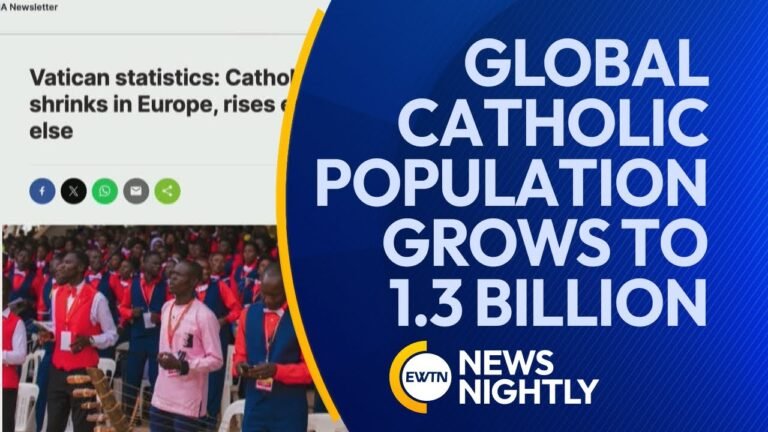
As of 2023, the global Catholic population stands at approximately 1.3 billion, making it the largest Christian denomination worldwide. This significant number reflects not only the enduring appeal of Catholicism but also its rich cultural and spiritual diversity across continents. Understanding the distribution and demographics of Catholics can provide valuable insights into global religious trends and the role of faith in shaping communities. In this article, we explore the factors contributing to the growth of Catholicism and what it means for the future of the Church.
How many Catholics are there globally today?
As of 2023, there are approximately 1.3 billion Catholics worldwide.
What country has a 100% Catholic population?
Vatican City stands out as the only country with a population that is entirely Roman Catholic, boasting a remarkable 100% membership rate. This unique status is not only a reflection of its religious leadership as the heart of the Catholic Church but also highlights its distinct position in the global religious landscape. The Vatican’s influence extends beyond its small size, shaping Catholic doctrine and practice worldwide.
In addition to Vatican City, East Timor follows closely with an impressive 97% of its population identifying as Catholic. This high percentage underscores the deep-rooted cultural and historical ties between the nation and the Catholic faith. Both countries exemplify the strong connection between religion and national identity, showcasing how ecclesiastical leadership and cultural heritage can shape a nation’s demographic profile.
Is the Catholic Church experiencing growth or decline?
The global landscape of the Catholic Church shows a modest growth, with the total number of baptized Catholics rising from 1.376 billion in 2021 to 1.390 billion in 2022. This 1.0% increase highlights the Church’s resilience, particularly as it navigates the challenges of modern society. Different regions, however, exhibit varying trends, reflecting the diverse cultural and social dynamics at play.
Africa stands out as a beacon of growth, witnessing a remarkable 3% increase in its Catholic population, expanding from 265 million to 273 million in just one year. This surge underscores the Church’s vibrant presence on the continent, driven by a young and growing demographic that continues to embrace its faith. As the Catholic Church adapts to the evolving global context, these regional variations provide valuable insights into its future trajectory.
What is the number of Catholic priests worldwide in 2024?
As of 2024, the global count of Catholic priests stands at 407,730, reflecting a steady decline, particularly in Europe, which has seen a loss of 2,745 priests. This total comprises 279,171 diocesan priests and 128,559 religious priests, highlighting a shift in the clerical landscape. The ongoing changes in priesthood numbers underscore evolving trends within the Catholic Church, prompting discussions about the future of pastoral care and community engagement.
Understanding the Numbers: A Deep Dive into Global Catholicism
Catholicism, with over a billion adherents worldwide, presents a fascinating tapestry of faith, culture, and practice that transcends borders. The growth of the Church in regions like Africa and Asia highlights a dynamic shift in demographics, while Europe and the Americas face challenges of secularization and declining participation. As we explore the intricate statistics behind global Catholicism, we uncover not only the resilience of the faith but also the diverse expressions of spirituality that shape communities. This journey through numbers reveals a living, breathing institution that continues to adapt and evolve, reflecting both the challenges and hopes of its followers around the globe.
Trends Shaping Faith: Insights into the Global Catholic Community
In an era marked by rapid change, the global Catholic community is witnessing a transformation shaped by evolving cultural dynamics and technological advancements. As younger generations engage with faith in new ways, there is a notable shift towards inclusivity and social justice, reflecting broader societal movements. This engagement is not just about traditional practices; it embraces a holistic understanding of spirituality that resonates with diverse experiences and backgrounds.
Digital platforms have emerged as vital tools for connection and outreach, enabling parishes and organizations to reach a wider audience. Virtual Masses, online retreats, and social media campaigns have become commonplace, allowing believers to foster community and share their faith beyond physical boundaries. This digital transformation is particularly significant in regions where access to traditional religious gatherings is limited, creating pathways for dialogue and engagement that were previously unimaginable.
Moreover, the emphasis on interfaith dialogue and collaboration is reshaping the Catholic identity on a global scale. As Catholics engage with individuals from different faith traditions, there is a growing recognition of shared values and common goals, particularly in addressing pressing issues like climate change and poverty. This trend not only enriches the faith experience but also reinforces the Church’s mission to promote peace and understanding in an increasingly polarized world. Through these evolving practices, the Catholic community is not only adapting to contemporary challenges but also reaffirming its relevance in today’s society.
From Growth to Decline: The Dynamics of Catholic Population Statistics
The dynamics of Catholic population statistics reveal a compelling narrative of growth and decline, shaped by cultural, social, and economic factors across the globe. While regions like Africa and parts of Asia have witnessed a surge in adherents, fueled by youthful demographics and revitalized faith communities, Western countries experience a contrasting trend marked by decreased participation and shifting beliefs. This complex interplay underscores the Church’s evolving role in modern society, as it grapples with the challenges of secularization and the need for renewal. Understanding these trends is crítico for grasping the future of Catholicism and its impact on global spirituality.
With approximately 1.3 billion Catholics worldwide, the Church continues to play a significant role in global culture, society, and spirituality. This vast community not only reflects a rich tapestry of traditions and beliefs but also emphasizes the enduring influence of Catholicism in addressing contemporary issues. As the faithful navigate an ever-evolving world, their collective voice remains a powerful force for change and unity, showcasing the relevance and resilience of the Catholic Church in today’s society.