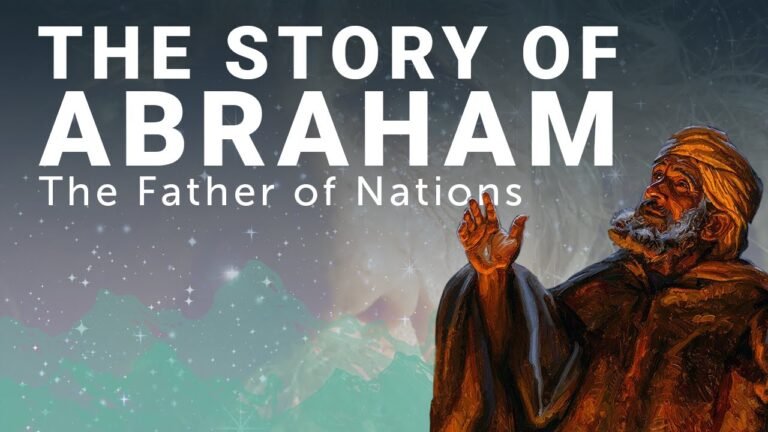
The Legacy of Abraham: Faith and Covenant in Biblical History
Abraham, a central figure in the Bible, stands as a symbol of faith and obedience, embodying the journey of human belief and divine promise. Revered in Judaism, Christianity, and Islam, his story unfolds a rich tapestry of challenges and triumphs, illustrating the profound relationship between humanity and the divine. From his unwavering commitment to leave his homeland to the moment he nearly sacrifices his son Isaac, Abraham’s life is a testament to the power of faith in shaping destinies and communities. As we explore his narrative, we uncover timeless lessons that resonate through the ages, inviting reflection on our own paths of belief and purpose.
What makes Abraham a significant figure in the Bible?
Abraham is renowned in the Bible for his unwavering faith and obedience to God. His most notable moment comes in the book of Genesis, where he faces a profound test: commanded to sacrifice his beloved son Isaac, Abraham demonstrates remarkable trust in God’s plan. Without hesitation, he prepares to carry out the command, showcasing his deep devotion. However, at the critical moment, God intervenes, sparing Isaac and providing a ram as a substitute sacrifice, solidifying Abraham’s legacy as a pivotal figure in the faith traditions that revere him.
What is the central theme of Abraham’s story?
The story of Abraham conveys a powerful message about the importance of living by faith rather than seeking control over circumstances. Driven by unwavering faith, Abraham responded to God’s call by leaving behind the safety of the familiar, stepping into the unknown with nothing but a promise. His journey exemplifies the courage to embrace uncertainty and trust in a greater purpose, illustrating that true fulfillment often lies beyond the boundaries of our comfort zones. Through Abraham’s example, we are reminded that faith can guide us to our destined territories, even when the path ahead remains unclear.
What was God’s calling for Abraham?
God called Abraham to embark on an extraordinary journey, urging him to leave behind the familiar comforts of his homeland. This divine command was not just a physical relocation; it represented a profound leap of faith into the unknown. Abraham was promised a new land, one that would be rich with opportunity and blessing, setting the stage for a transformative legacy.
In this new land, God assured Abraham that he would become the father of a great nation, instilling within him the hope and purpose that would guide his path. The promise of blessings extended not only to Abraham but also to his descendants, forging a covenant that would shape the future. Through this call, God invited Abraham to trust in a vision far greater than himself, laying the foundation for a remarkable story of faith and fulfillment.
Exploring the Roots of Faith Through Abraham’s Journey
Abraham’s journey stands as a profound testament to the power of faith and the quest for understanding. From his humble beginnings in Ur of the Chaldeans to his covenant with God, Abraham’s life reflects a transformative odyssey that challenges conventional notions of belief. His willingness to leave behind everything familiar and venture into the unknown is a powerful metaphor for the spiritual journey we all undertake. This narrative not only highlights the struggles and triumphs of Abraham but also serves as a beacon of hope for those searching for their own path to faith.
As Abraham navigated trials, including the sacrifice of his beloved son Isaac, his unwavering trust in divine promises illuminated the essence of true faith. Each step along his journey brought him closer to understanding his purpose and the nature of his relationship with God. This exploration of faith through Abraham’s eyes encourages us to embrace uncertainty and seek deeper connections within our own spiritual lives. By examining the roots of Abraham’s faith, we uncover valuable lessons about resilience, commitment, and the transformative power of belief that resonate across generations.
The Covenant that Shaped a Nation
In the annals of history, few agreements have had as profound an impact on a nation’s identity as the covenant that shaped the United States. Rooted in a commitment to liberty and justice, this foundational pact emerged from a tapestry of diverse ideas and beliefs. The framers, inspired by Enlightenment principles, sought to forge a society where individual rights were paramount and governance was derived from the consent of the governed. This vision not only laid the groundwork for a new nation but also served as a beacon of hope for generations to come.
As the nation grew, the covenant evolved, adapting to the shifting tides of social and political change. It became a living document, reflecting the struggles and triumphs of its people. The expansion of civil rights, the fight for equality, and the ongoing dialogue about freedom and responsibility all stemmed from this original promise. Each chapter in the nation’s story has reinforced the idea that the covenant is not merely a historical artifact but a dynamic framework that continues to guide and challenge the collective conscience.
Today, the legacy of this covenant endures, reminding us of our shared responsibilities and the importance of unity in diversity. As citizens navigate the complexities of modern governance, the principles embedded in that initial agreement resonate with renewed urgency. It calls for active participation, empathy, and a commitment to uphold the ideals that define the nation. In honoring this covenant, we not only pay tribute to our past but also illuminate the path toward a more equitable future.
Abraham’s Impact on Spiritual Heritage
Abraham is often regarded as a pivotal figure in the spiritual heritage of multiple faiths, embodying the essence of faith and obedience. His unwavering commitment to God, as depicted in sacred texts, establishes a foundation for the beliefs of Judaism, Christianity, and Islam. Through his covenant with God, Abraham not only became a patriarch but also a model of faith for countless generations, inspiring millions to explore and deepen their spiritual journeys.
The narratives surrounding Abraham illustrate profound themes of trust and sacrifice, which resonate across cultures and religions. His willingness to leave his homeland and embrace the unknown serves as a powerful metaphor for spiritual growth and the pursuit of divine purpose. This willingness to act on faith, even in the face of uncertainty, invites followers to reflect on their own relationships with the divine, encouraging them to seek a deeper understanding of their beliefs.
Abraham’s legacy extends beyond personal faith; it has shaped communal identities and interfaith dialogues throughout history. His role as a unifying figure fosters connections among different religious traditions, highlighting shared values and aspirations for peace, justice, and compassion. As communities continue to grapple with challenges in a diverse world, Abraham’s story remains a beacon of hope, urging individuals to embrace their spiritual heritage while fostering mutual respect and understanding among all faiths.
Unraveling the Threads of Divine Promise
Throughout history, the threads of divine promise have woven a tapestry of hope and faith that transcends time and culture. Each strand tells a story of human aspiration, a longing for connection with the sacred, and the belief in a greater purpose. As we explore these narratives, we uncover the profound impact of these promises on individual lives and entire communities, inspiring resilience in the face of adversity and nurturing a shared vision of a brighter future. In every challenge faced, the enduring light of this divine assurance beckons us to rise, reminding us that we are never alone on our journey.
Abraham’s journey transcends time, offering profound lessons in faith, resilience, and the power of belief. His unwavering commitment to purpose amidst uncertainty inspires countless generations to pursue their own paths with courage and conviction. By embracing the essence of his story, we can navigate the complexities of our lives, finding strength in our own beliefs and the courage to forge ahead in the face of adversity.