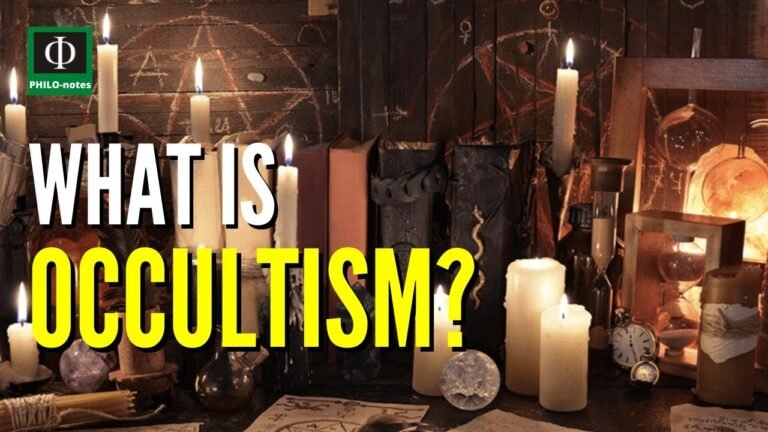
Understanding the Definition of Occult
The term occult often evokes a sense of mystery and intrigue, encompassing a wide range of beliefs and practices that delve into the hidden and the supernatural. Broadly defined, the occult refers to knowledge that is beyond the realm of ordinary understanding, often focusing on the mystical, esoteric, and metaphysical aspects of life. From ancient rituals to modern spiritual practices, the occult challenges conventional perceptions of reality, inviting individuals to explore the unseen forces that shape our existence. This exploration not only captivates the imagination but also raises profound questions about the nature of knowledge, belief, and the universe itself.
What does occult truly mean today?
Occult refers to knowledge of the hidden or mysterious, often involving supernatural, mystical, or magical practices and beliefs beyond ordinary understanding.
What does the word occultic mean?
The term “occultic” refers to phenomena or practices that are believed to involve supernatural or supernormal forces. It encompasses a wide range of beliefs and rituals that suggest the existence of hidden knowledge or powers that are not accessible to the ordinary understanding of reality. This realm of the occult invites curiosity and intrigue, often exploring the mysteries that lie beyond the physical world.
Often associated with secretive traditions and esoteric wisdom, the occultic can include various practices such as astrology, alchemy, and divination. These pursuits seek to uncover insights that transcend conventional wisdom, tapping into the unknown to reveal deeper truths about existence. As a concept, the occultic encourages individuals to explore the boundaries of knowledge and belief, challenging them to question what lies beyond the visible and the tangible.
What does the Oxford dictionary define as the meaning of occult?
The term “occult” refers to a realm of supernatural, mystical, or magical beliefs, practices, and phenomena that often lie beyond ordinary understanding. Its roots can be traced back to the late 15th century, where it initially emerged as a verb meaning “to conceal.” This highlights the enigmatic nature of the subject, suggesting that what is considered occult is deliberately hidden from mainstream awareness.
Derived from the Latin word “occultare,” meaning “to secrete,” the term emphasizes a focus on hidden knowledge and esoteric teachings. In various cultures and traditions, the occult encompasses a wide range of practices, from alchemy and astrology to divination and spiritualism. These practices are often shrouded in mystery and intrigue, attracting those who seek deeper insight into the unseen forces that shape our existence.
The allure of the occult lies in its promise of uncovering truths that are not readily accessible. As individuals delve into these mystical realms, they often seek to connect with a greater understanding of the universe and their place within it. Whether viewed with skepticism or reverence, the occult continues to captivate the imagination, inviting exploration into the hidden dimensions of life.
What does the word occultus mean?
Occultus, derived from the Latin term meaning clandestine, hidden, or secret, signifies a realm that lies beyond ordinary perception. This concept evokes an air of mystery, capturing the essence of things that are concealed from the untrained eye. In many cultures, the pursuit of understanding these hidden truths has sparked intrigue and fascination, leading individuals to explore the depths of the unknown.
In contemporary contexts, the term has evolved to encompass a range of practices and beliefs that seek to tap into these elusive forces. Occult practices often involve rituals, symbols, and esoteric knowledge aimed at unlocking powers that are not readily accessible to the average person. This exploration is not merely about the supernatural; it also reflects a deep desire to connect with the fundamental laws that govern existence.
Ultimately, the allure of the occult lies in its promise of enlightenment and empowerment. By delving into the secrets of the universe, practitioners aim to harness hidden energies for personal growth and transformation. This journey, while shrouded in mystery, invites individuals to question the boundaries of reality and embrace the potential that lies within the shadows.
Unveiling Hidden Knowledge: What Does Occult Really Mean?
Occult knowledge has long been shrouded in mystery, often associated with the arcane and the esoteric. At its core, the term “occult” refers to hidden or secret knowledge that is not readily accessible to the average person. This encompasses a wide range of subjects, from ancient alchemical practices to mystical rituals, all of which seek to uncover deeper truths about the universe and our place within it. The allure of the occult lies in its promise of enlightenment, inviting seekers to delve into realms beyond conventional understanding.
Exploring the world of the occult reveals a rich tapestry of philosophies and traditions that challenge mainstream beliefs. Whether through astrology, tarot, or various spiritual practices, individuals engage with these hidden teachings to gain insights into their lives and the cosmos. This pursuit often emphasizes personal transformation, encouraging practitioners to unlock their potential and tap into unseen forces that influence their existence. By embracing the unknown, one can embark on a journey of self-discovery that transcends the ordinary.
In a rapidly changing world, interest in the occult is experiencing a resurgence, as many seek alternative paths to knowledge and meaning. This revival invites a new generation to question established norms and explore the unseen. As people turn to the occult for guidance, they find not only a connection to ancient wisdom but also a community of like-minded individuals eager to share their experiences. Ultimately, the exploration of occult knowledge serves as a reminder that there is much more to reality than what meets the eye, urging us to look beyond the surface and discover the hidden truths that lie beneath.
The Secrets Behind Occult: A Comprehensive Exploration
Delving into the enigmatic world of the occult reveals a rich tapestry of ancient practices, hidden knowledge, and spiritual exploration that has captivated humanity for centuries. From the esoteric teachings of alchemy and astrology to the intricate rituals of various mystical traditions, the secrets behind the occult offer profound insights into the nature of existence and the universe. This comprehensive exploration uncovers the philosophical underpinnings and historical contexts that shape these practices, revealing how they intertwine with human consciousness and the quest for enlightenment. As we peel back the layers of secrecy, we invite curiosity and understanding, illuminating the path toward wisdom that has long been shrouded in mystery.
Occult Explained: Myths, Facts, and Insights
The occult has long been shrouded in mystery, often conflated with superstition and fear, but its true nature is far more nuanced. At its core, the occult encompasses a range of spiritual practices and philosophies aiming to uncover hidden truths about the universe and our place within it. While myths abound—such as the belief that all occult practices involve malevolence or witchcraft—the reality is that many practitioners seek knowledge and personal empowerment. By exploring ancient texts, rituals, and symbols, one can gain profound insights into the self and the cosmos, revealing how the line between the mundane and the mystical is often thinner than we perceive. Understanding the occult invites a broader perspective on human experience, encouraging curiosity rather than fear, and fostering a deeper connection to the unseen forces that shape our lives.
Decoding Occultism: A Journey into the Unknown
Occultism has captivated the human imagination for centuries, weaving a tapestry of mystery, spirituality, and hidden knowledge. This enigmatic realm invites seekers to explore the unseen forces that shape our reality, from ancient alchemical practices to modern esoteric philosophies. By decoding the symbols, rituals, and teachings that form the backbone of occult traditions, individuals embark on a transformative journey that challenges conventional beliefs and expands their understanding of existence.
As we delve deeper into the shadows of the unknown, we uncover the profound connections between the material and spiritual worlds. The exploration of occult practices encourages a critical examination of the self, prompting introspection and personal growth. In this quest for enlightenment, seekers often find that the answers lie not in dogma, but in the wisdom gleaned from experience and intuition. Ultimately, decoding occultism reveals a rich landscape of knowledge that can illuminate our path and foster a deeper connection to the universe.
Understanding the definition of the occult opens up a fascinating exploration into the realms of mystery, spirituality, and hidden knowledge. This rich tapestry of beliefs and practices invites individuals to delve deeper into the unknown, challenging perceptions and expanding horizons. Whether viewed as a subject of intrigue or a path to enlightenment, the occult encourages a journey that transcends the ordinary, inviting seekers to uncover the layers of reality that lie just beyond the surface.