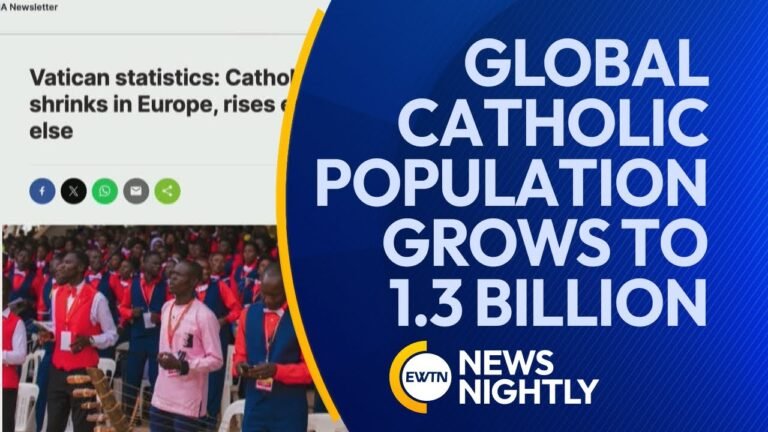
Global Catholic Population Insights
As the world continues to evolve, so does the landscape of global religions, with Catholicism remaining one of the largest faiths. But just how many Catholics are there today? This question not only highlights the sheer scale of the Catholic community but also opens a window into the cultural and social dynamics that shape the lives of millions. In this article, we will explore the latest statistics, trends, and the factors influencing the growth of Catholicism around the globe.
How many Catholics are there worldwide today?
As of 2023, there are approximately 1.3 billion Catholics worldwide.
Is Catholicism the most populous religion globally?
Christianity stands as the largest religion globally, boasting over two billion adherents. Within Christianity, Catholicism represents the most significant branch, with approximately 1.3 billion members. This extensive following highlights the profound influence of Catholicism on cultures, traditions, and societies around the world.
The widespread presence of Catholicism is evident in numerous countries, where it shapes social values and community dynamics. Its rich history, combined with a commitment to education and humanitarian efforts, underscores the role of Catholicism not only as a faith but also as a driving force for social change. As the largest denomination within Christianity, Catholicism continues to play a pivotal role in the global religious landscape.
Is the Catholic Church expanding or declining?
The Catholic Church has experienced a slight global increase in its membership, with baptized Catholics rising from 1.376 billion in 2021 to 1.390 billion in 2022, marking a 1.0% growth. This uptick reflects the Church’s resilience and its ability to attract new members, albeit at varying rates across different regions.
Notably, Africa stands out as a significant contributor to this growth, showcasing a robust 3% increase in the number of Catholics, which climbed from 265 million to 273 million. This trend highlights a vibrant faith community in Africa, suggesting that the Church’s influence and reach are expanding in regions where the population and spiritual engagement are on the rise.
What country has a population that is entirely Catholic?
Vatican City stands out as the only country with a population that is 100% Catholic, making it a unique center of the Catholic faith. This small, sovereign city-state not only serves as the spiritual and administrative heart of the Catholic Church but also reflects a deep commitment to its religious identity. Following closely is East Timor, where approximately 97% of the population identifies as Catholic, showcasing the significant influence of the church in this Southeast Asian nation.
Understanding Trends and Demographics Worldwide
In today’s interconnected world, understanding trends and demographics is clave for businesses and policymakers alike. As populations shift and evolve, the dynamics of consumer behavior transform, influencing everything from product development to marketing strategies. By analyzing demographic data, organizations can identify emerging markets and tailor their offerings to meet the specific needs of diverse populations, ensuring they stay relevant in a rapidly changing landscape.
Global trends reveal significant shifts in age distribution, urbanization, and technological adoption. For instance, the rise of the millennial and Gen Z generations has sparked a demand for sustainable practices, with younger consumers increasingly favoring brands that demonstrate social responsibility. Additionally, urban areas continue to grow, presenting unique challenges and opportunities for infrastructure development, housing, and services. Understanding these trends allows businesses to not only anticipate consumer preferences but also to contribute positively to the communities they serve.
Moreover, the digital revolution has transformed how we gather and interpret demographic data. Advanced analytics and artificial intelligence enable organizations to mine vast amounts of information, uncovering insights that were previously inaccessible. This empowers decision-makers to make informed choices based on real-time data, fostering innovation and growth. By embracing these technological advancements and staying attuned to global trends, businesses can position themselves for success in an increasingly competitive environment.
A Deep Dive into Catholicism’s Global Reach
Catholicism, with over a billion adherents worldwide, serves as a vibrant tapestry woven from diverse cultures, languages, and traditions. Its global reach extends far beyond the Vatican, influencing everything from local customs to international social justice movements. In countries across Africa, Asia, and Latin America, the Church adapts its teachings to resonate with local beliefs while maintaining its core doctrines. This dynamic interplay fosters a rich environment where faith meets daily life, encouraging communities to unite in shared values and collective action.
Moreover, the Catholic Church plays a pivotal role in addressing pressing global issues such as poverty, education, and healthcare. Through its extensive network of charities and missions, it provides essential services to the marginalized, advocating for human rights and social equity. This commitment to service not only reinforces the Church’s relevance in the modern world but also inspires a sense of solidarity among believers. As Catholicism continues to evolve, its ability to engage with contemporary challenges ensures that it remains a powerful force for good across the globe.
Key Statistics Shaping the Faith Today
In an era of rapid change, the dynamics of faith are being reshaped by compelling statistics that highlight both challenges and opportunities. Recent studies reveal that over 60% of millennials identify as spiritual but not religious, indicating a shift towards personal belief systems that prioritize experience over tradition. Meanwhile, global religious adherence continues to rise, with projections suggesting that by 2050, more than 9 billion people will practice some form of faith. These trends underscore a growing diversity in belief, prompting faith leaders to adapt their approaches to engage younger generations and foster inclusive communities. Understanding these key statistics is essential for anyone looking to navigate the evolving landscape of spirituality in today’s world.
Exploring Growth Patterns Across Continents
Across the globe, growth patterns reveal fascinating insights into the dynamics of development, driven by diverse cultural, economic, and environmental factors. In Asia, rapid urbanization and technological innovation propel nations like China and India into the forefront of the global economy, while in Africa, a youthful population and rich natural resources present untapped potential for sustainable growth. Meanwhile, Europe and North America face the challenge of adapting to aging demographics and shifting economic landscapes, prompting a focus on innovation and resilience. By examining these varied trajectories, we can better understand the interconnectedness of our world and the unique strategies each continent employs to navigate the complexities of growth and progress.
The Future of Catholicism in a Changing World
As the world evolves at an unprecedented pace, the future of Catholicism hinges on its ability to adapt while remaining true to its core values. Embracing modern technology and fostering inclusive dialogue can help the Church engage with younger generations, addressing their spiritual needs and social concerns. By prioritizing compassion and community outreach, Catholicism can become a beacon of hope in a rapidly changing society, demonstrating that faith and progress can coexist. In navigating challenges such as secularism and cultural diversity, the Church has the opportunity to revitalize its mission and inspire a renewed sense of purpose among its followers.
With over 1.3 billion followers worldwide, the Catholic Church remains one of the largest religious institutions, shaping cultures and communities across the globe. This vast number reflects not just a rich tradition but also an evolving faith that continues to engage with modern challenges. As the world changes, so too does the landscape of Catholicism, making it essential to understand both its historical significance and its contemporary relevance.