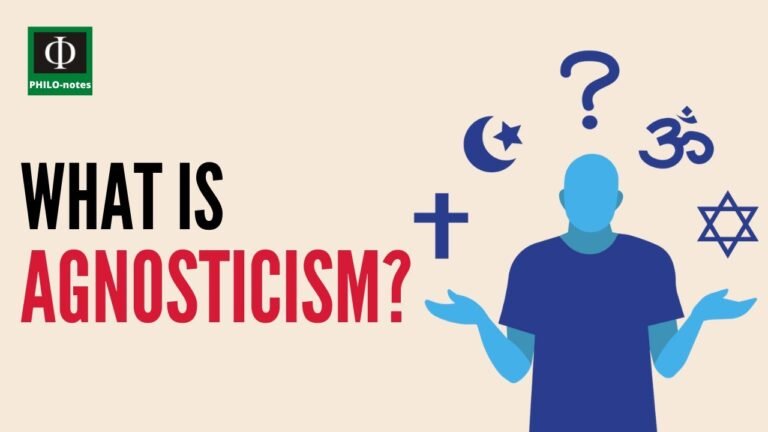
Understanding Agnosticism: A Comprehensive Guide
In a world filled with diverse beliefs and perspectives, the term agnostic often surfaces in discussions about faith and knowledge. But what does it truly mean to be agnostic? At its core, agnosticism embodies a philosophical stance of uncertainty regarding the existence of deities or the ultimate nature of reality. It invites individuals to embrace inquiry and skepticism, acknowledging that some questions may remain unanswered. As we explore the nuances of agnosticism, we uncover its implications for personal belief systems and its relevance in contemporary dialogues about spirituality and science.
What does being agnostic truly mean?
Being agnostic means having uncertainty about the existence of God or a higher power, believing that such knowledge is unknown or unknowable.
What is the simple meaning of agnostic?
Agnosticism is a perspective that embraces uncertainty about ultimate realities, particularly regarding the existence of a deity. An agnostic is someone who neither affirms nor denies the existence of God, reflecting a belief that such matters may be beyond human understanding. This open-minded stance can also extend to other opinions, including political views, where an agnostic may refrain from taking a definitive position. In essence, agnostics prioritize inquiry and contemplation over dogmatic beliefs.
Can you provide an example of an agnostic?
An apathetic agnostic embodies a unique perspective on spirituality and belief. This individual maintains that the existence of a deity is uncertain, yet remains indifferent to the question. Their stance reflects a broader philosophy that prioritizes personal experience and inquiry over dogma or doctrine, making them less concerned with the implications of belief.
This indifference does not stem from a lack of curiosity but rather from a conscious choice to focus on the tangible aspects of life. For the apathetic agnostic, the quest for knowledge and understanding is directed towards more immediate concerns and experiences, rather than metaphysical questions that may never be answered. This approach allows them to engage with the world around them without the burden of existential uncertainty.
Ultimately, the apathetic agnostic invites a refreshing viewpoint in discussions about belief and spirituality. By acknowledging their uncertainty while choosing to disengage from the debate, they highlight the importance of living in the present and finding meaning in everyday life. Their philosophy encourages others to consider alternative ways of navigating the complexities of existence without being tethered to the question of a higher power.
What distinguishes an atheist from an agnostic?
Atheism and agnosticism represent distinct viewpoints on belief in a deity. Atheists firmly hold the conviction that no god exists, rejecting the notion of divine beings altogether. In contrast, agnostics adopt a more uncertain stance, asserting that the existence of a god or the origins of the universe remain unknown and potentially unknowable. This fundamental difference highlights the varying degrees of belief and skepticism that individuals may have regarding spirituality and the divine.
Exploring Beliefs Beyond Certainty
In a world increasingly defined by fixed ideologies and polarized opinions, exploring beliefs beyond certainty invites us to embrace the gray areas of understanding. This journey encourages us to question the absolutes we often cling to, allowing for a richer tapestry of thought where curiosity reigns over dogma. By engaging with diverse perspectives, we not only expand our own horizons but foster empathy and dialogue, ultimately cultivating a more inclusive society. In this exploration, we discover that true wisdom lies not in the answers we possess, but in the questions we dare to ask.
Navigating the Spectrum of Faith
Faith is a journey that often resembles a spectrum, with individuals finding their place along a diverse range of beliefs and practices. Each person’s experience is shaped by personal stories, cultural backgrounds, and unique encounters with the divine. This journey can be both enlightening and challenging, as it encourages individuals to question, explore, and ultimately define what faith means to them. Embracing this spectrum allows for a richer understanding of spirituality, fostering connections among people with different perspectives and traditions.
As we navigate this intricate landscape, we discover that faith is not a static destination but an evolving process. It invites us to engage in meaningful conversations, challenge preconceived notions, and cultivate empathy for those whose beliefs differ from our own. By recognizing the value of diverse faith expressions, we can create a more inclusive community where dialogue thrives and understanding flourishes. Ultimately, this journey of exploration not only deepens our personal convictions but also enriches our collective experience of faith.
The Middle Ground: Faith vs. Doubt
In the delicate balance of faith and doubt, individuals often find themselves navigating a complex landscape where belief and skepticism coexist. Faith can serve as a comforting anchor, providing strength and purpose in times of uncertainty, while doubt challenges us to question and seek deeper understanding. This interplay encourages personal growth, fostering resilience and a more nuanced perspective on life’s mysteries. Ultimately, embracing both faith and doubt can lead to a richer, more authentic experience, allowing us to explore the depths of our convictions while remaining open to new insights and possibilities.
A Journey Through Uncertainty
Life often unfolds like a winding path, where each twist and turn brings both challenges and opportunities. Embracing uncertainty can be daunting, yet it is within this unpredictable terrain that we discover our true selves. Each moment of doubt transforms into a chance for growth, urging us to adapt and innovate. As we navigate the unknown, we learn to trust our instincts and cultivate resilience, ultimately illuminating the way forward. In this journey through uncertainty, we find strength in vulnerability and beauty in the unexpected, crafting a narrative that is uniquely our own.
Clarifying the Agnostic Perspective
The agnostic perspective invites a thoughtful exploration of knowledge and belief, emphasizing the importance of uncertainty in the pursuit of truth. By recognizing the limitations of human understanding, agnosticism encourages individuals to question dogmas and remain open to diverse viewpoints. This approach fosters intellectual humility, allowing for a richer dialogue about life’s profound mysteries without the constraints of absolute certainty.
At its core, agnosticism is not a rejection of spirituality or inquiry; rather, it serves as a bridge between skepticism and faith. Agnostics often seek to engage with both scientific reasoning and philosophical questioning, striving to find balance in their worldview. This unique stance promotes a sense of curiosity, urging individuals to explore various beliefs while acknowledging that definitive answers may remain elusive.
Ultimately, the agnostic perspective cultivates a space for ongoing discovery and reflection. It champions the idea that life’s most significant questions—about existence, purpose, and the divine—can be approached with both wonder and caution. By embracing uncertainty, agnostics encourage a collective journey toward understanding, where the quest for knowledge is as valuable as the answers themselves.
Embracing the term agnostic invites a deeper exploration of our understanding of knowledge and belief systems. It highlights a perspective that values inquiry over dogma, encouraging a thoughtful examination of life’s biggest questions without the constraints of definitive answers. In a world rich with diverse viewpoints, adopting an agnostic stance can foster open-mindedness and dialogue, allowing individuals to navigate the complexities of existence with curiosity and respect for differing beliefs.