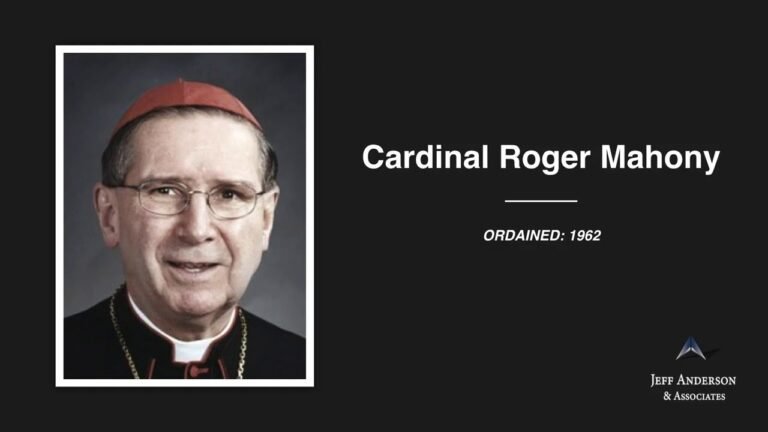
Cardinal Roger Mahony: A Controversial Legacy in the Catholic Church
Cardinal Roger Mahony, a prominent figure in the Catholic Church, has played a pivotal role in shaping the religious landscape of Los Angeles and beyond. Serving as the Archbishop from 1985 to 2011, Mahony faced both acclaim and controversy, particularly regarding his handling of clergy abuse allegations. This article delves into his influential career, examining the complexities of his leadership and the lasting impact of his decisions on the Church and its faithful.
What impact did Cardinal Roger Mahony have?
Cardinal Roger Mahony significantly influenced the Catholic Church in Los Angeles, focusing on social justice, immigration reform, and community outreach, while facing criticism for handling abuse scandals.
Who is Cardinal Roger Mahony and what is his role in the Catholic Church?
Cardinal Roger Mahony is a prominent figure in the Catholic Church, recognized for his influential leadership as the Archbishop of Los Angeles from 1985 until his retirement in 2011. During his tenure, he played a imprescindible role in expanding the archdiocese and addressing the needs of a diverse and growing Catholic population, emphasizing social justice, education, and community service. Known for his progressive views on various issues, Mahony has also been a vocal advocate for immigrant rights and interfaith dialogue. His legacy, however, is complex, as he faced significant scrutiny over the handling of sexual abuse cases within the Church, prompting ongoing discussions about accountability and reform in ecclesiastical governance.
What controversies has Cardinal Roger Mahony been involved in during his career?
Cardinal Roger Mahony, the former Archbishop of Los Angeles, has faced significant controversies primarily related to the Catholic Church’s handling of sexual abuse cases. Throughout the late 20th and early 21st centuries, Mahony was criticized for his role in transferring priests accused of abuse to different parishes rather than reporting them to authorities. This approach was seen as a failure to protect vulnerable individuals and has led to widespread outrage from victims and advocacy groups, prompting calls for accountability within the Church.
In addition to the abuse scandal, Mahony’s public stances on immigration and social justice issues have also sparked debate. His outspoken support for immigrant rights and criticism of immigration enforcement policies drew ire from some conservative factions, who accused him of overstepping his ecclesiastical role. These controversies have not only shaped his legacy but also highlighted the broader challenges the Church faces in addressing both past misdeeds and contemporary social issues.
How has Cardinal Roger Mahony influenced the Archdiocese of Los Angeles?
Cardinal Roger Mahony has played a pivotal role in shaping the Archdiocese of Los Angeles, serving as its archbishop from 1985 to 2011. His tenure was marked by a commitment to social justice, interfaith dialogue, and community outreach, which helped to enhance the Church’s presence and influence in one of the most diverse cities in the world. Mahony championed various initiatives, including the establishment of programs for immigrant assistance and the promotion of multiculturalism within the Church, reflecting the rich tapestry of the archdiocese’s congregation.
Moreover, Mahony’s innovative approach to pastoral care and education significantly transformed the archdiocese. He was instrumental in expanding Catholic schools and developing new parishes to meet the growing population’s needs. Despite facing challenges, including controversies related to clerical abuse scandals, his legacy continues to resonate through ongoing efforts to foster inclusivity and spiritual growth in the community, ensuring that the Archdiocese of Los Angeles remains a dynamic force in the Catholic Church.
What are Cardinal Roger Mahony’s views on contemporary issues facing the Catholic Church?
Cardinal Roger Mahony has consistently advocated for a more inclusive and compassionate approach within the Catholic Church, particularly in addressing contemporary social issues. He emphasizes the importance of engaging with marginalized communities, arguing that the Church should be a beacon of hope and support for those affected by poverty, immigration, and social injustice. By prioritizing outreach and dialogue, Mahony believes the Church can foster a deeper understanding of its mission and effectively respond to the needs of the modern world.
In recent discussions, Mahony has also highlighted the significance of transparency and accountability within Church leadership, especially in light of the sexual abuse crisis. He urges the institution to confront its past failings openly and work towards rebuilding trust with the faithful. His stance reflects a broader call for reform, advocating for policies that prioritize the dignity and safety of all individuals within the Church community.
Furthermore, Mahony recognizes the shifting cultural landscape and the need for the Church to adapt its teachings and practices to remain relevant. He supports a more progressive interpretation of doctrine that aligns with contemporary values, particularly regarding issues like gender equality and LGBTQ+ rights. By embracing a more inclusive vision, Mahony envisions a Church that not only preserves its core beliefs but also resonates with the diverse experiences of today’s society.
Navigating Faith and Scandal
In an era where faith and scandal often collide, the path to spiritual authenticity has never felt more complex. Many individuals grapple with the tension between their deeply held beliefs and the morally ambiguous behaviors exhibited by influential figures within their communities. This struggle prompts a reevaluation of what it means to practice faith in a world rife with contradictions. As people seek to reconcile their spiritual values with the realities around them, they are discovering the importance of personal integrity and the courage to question established norms.
Amidst this turmoil, a growing movement emphasizes the need for transparency and accountability within religious institutions. Advocates argue that confronting scandals head-on can lead to a more profound understanding of faith, one that encourages open dialogue and healing. By fostering environments where honesty prevails over silence, communities can transform their challenges into opportunities for growth and renewal. Ultimately, navigating the intricacies of faith and scandal not only strengthens individual convictions but also paves the way for a more inclusive and compassionate spiritual landscape.
The Duality of Leadership
Leadership embodies a fascinating duality, balancing authority with empathy. Effective leaders must navigate the complexities of decision-making while also fostering a supportive environment for their teams. This dual role requires not only the ability to direct and manage but also the capacity to listen and understand diverse perspectives. Leaders who embrace this balance are better equipped to inspire trust and loyalty, ultimately driving their teams toward success.
At the heart of this duality lies the interplay between vision and adaptability. A strong leader articulates a clear vision that guides the team’s efforts, providing a sense of purpose and direction. However, the most effective leaders also remain flexible, adjusting their strategies in response to changing circumstances and challenges. This adaptability not only enhances problem-solving capabilities but also demonstrates resilience, encouraging team members to embrace change and innovate.
Furthermore, the duality of leadership extends to the relationship between accountability and empowerment. Leaders are responsible for the outcomes of their decisions, yet they must also empower their team members to take ownership of their roles. By fostering a culture of accountability while encouraging autonomy, leaders can cultivate an environment where creativity thrives and individuals feel valued. This dynamic not only boosts morale but also enhances overall performance, creating a robust foundation for sustained success.
A Legacy Under Scrutiny
The legacy of influential figures often faces intense scrutiny as society evolves and re-evaluates historical narratives. What was once celebrated may now be questioned, leading to a complex dialogue about accountability and moral responsibility. This shift invites us to examine not just the accomplishments of these individuals, but also the broader implications of their actions on marginalized communities and the environment.
As we delve deeper into the past, it becomes clear that a legacy is not solely defined by achievements but also by the impact those achievements have on future generations. Many revered leaders are now being analyzed through a more critical lens, prompting discussions about their flaws and the context in which they operated. This reevaluation encourages a more nuanced understanding of history, emphasizing the importance of acknowledging both the positive and negative aspects of a legacy.
Ultimately, the scrutiny of legacies serves as a reminder of our collective responsibility to learn from history. By confronting uncomfortable truths, we not only honor those who came before us but also pave the way for a more informed and equitable future. In doing so, we ensure that the lessons of the past contribute to a more just society, where the complexities of legacy are embraced rather than ignored.
Faith, Power, and Accountability
In an increasingly complex world, faith serves as a guiding light, offering individuals a sense of purpose and direction. It transcends boundaries of culture and belief, uniting people in their quest for meaning. This collective spirituality fosters resilience, empowering individuals to navigate life’s challenges with confidence and hope. Through shared values and communal support, faith transforms personal struggles into collective strength, reinforcing the idea that we are never alone in our journeys.
Power, when rooted in integrity and compassion, can be a catalyst for positive change. It is not merely about authority; rather, it embodies the responsibility to uplift others and create opportunities for growth. Leaders who harness their influence with a genuine commitment to service inspire trust and motivate communities to come together for a common cause. This dynamic interplay between power and purpose can spark innovation and drive social progress, proving that true strength lies in our ability to empower those around us.
Accountability is the cornerstone of a thriving society, ensuring that individuals and institutions uphold their commitments to one another. It cultivates a culture of transparency, where actions are aligned with values and promises are honored. By holding ourselves and others accountable, we foster an environment of trust and collaboration, enabling us to work collectively towards shared goals. In this framework, faith, power, and accountability intertwine, creating a sustainable foundation for growth and harmony in our communities.
The Impact of Controversy on Faith
Controversy has long been a catalyst for deep reflection and transformation within various faith communities. When faced with challenging questions or opposing viewpoints, believers often find themselves at a crossroads, prompting a reevaluation of their beliefs and practices. This process can lead to a more profound understanding of their faith, as individuals grapple with the complexities of their convictions and the world around them.
Moreover, controversy can serve as a unifying force among followers, galvanizing them around shared values and beliefs. In times of turmoil, communities often rally together to address the issues at hand, fostering a sense of solidarity and purpose. This collective response not only strengthens their faith but also enhances their commitment to social justice and moral responsibility, as they seek to navigate the challenges posed by external criticism and internal dissent.
Ultimately, the impact of controversy on faith is multifaceted, leading to both growth and division. While some may find themselves questioning their beliefs, others may emerge with a renewed sense of conviction and community. This dynamic interplay underscores the importance of dialogue and understanding, reminding us that faith is not a static state but a living, evolving journey shaped by the experiences and challenges we encounter along the way.
Cardinal Roger Mahony’s legacy is a complex tapestry woven with both commendable achievements and significant controversies. His transformative role in the Catholic Church, particularly in advocating for social justice and immigrant rights, stands in stark contrast to the challenges surrounding his handling of abuse allegations. As the Church continues to grapple with its past, Mahony’s impact remains a pivotal chapter in understanding the evolving landscape of faith, morality, and accountability within religious institutions.