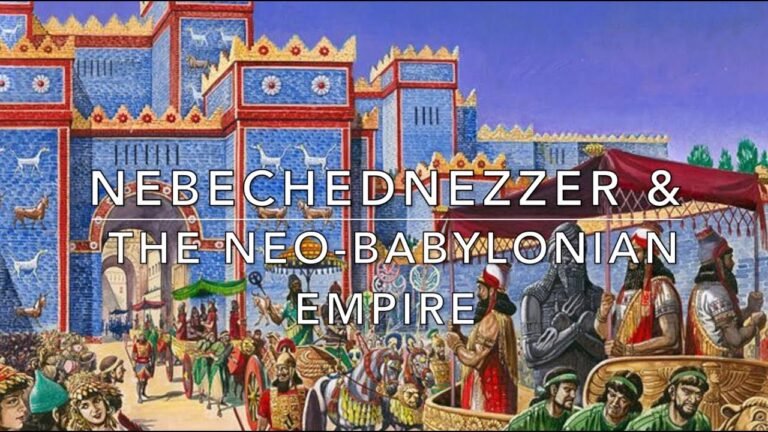
The Legacy of Neo-Babylonian Civilization
The Neo-Babylonian period, spanning from the 7th to the 6th century BCE, marks a remarkable chapter in ancient Mesopotamian history, characterized by cultural flourishing, architectural innovation, and significant advancements in astronomy and mathematics. This era, often associated with the reign of King Nebuchadnezzar II, witnessed the revival of Babylon as a political and cultural hub, renowned for its majestic structures like the Hanging Gardens and the Ishtar Gate. As we explore the rich tapestry of the Neo-Babylonian civilization, we uncover the legacies that shaped not only the region but also influenced subsequent cultures and societies throughout history.
What does Neo-Babylonian refer to?
The Neo-Babylonian empire, emerging in the 7th century BCE, marked a significant period in ancient Middle Eastern history. Centered in its capital, Babylon, this empire rose to prominence following the fall of the Assyrian power, showcasing remarkable advancements in culture, architecture, and governance. Its legacy includes the iconic Hanging Gardens, one of the Seven Wonders of the Ancient World, symbolizing the empire’s artistic and engineering prowess.
As it expanded, the Neo-Babylonian empire exerted influence over much of Southwest Asia, establishing itself as a formidable power in the region. The reign of Nebuchadnezzar II, one of its most renowned kings, is particularly noted for military conquests and extensive building projects that transformed Babylon into a vibrant urban center. The empire played a pivotal role in the cultural and political landscape of the ancient Near East, fostering advancements in mathematics, astronomy, and literature.
The decline of the Neo-Babylonian empire came abruptly with the rise of the Persian king Cyrus the Great, who defeated its final ruler in 539 BCE. This conquest not only ended the empire’s dominance but also marked the beginning of a new era in ancient history, as Babylon transitioned into a significant city within the expansive Persian Empire. The Neo-Babylonian period remains a esencial chapter in understanding the complexities of ancient civilizations and their enduring influence on subsequent cultures.
Are the Neo-Babylonians and Chaldeans identical?
The Neo-Babylonians and Chaldeans are closely related, as the Chaldean dynasty, also known as the Neo-Babylonian dynasty, was the ruling power in Babylon from 626 BC until its fall in 539 BC. This dynasty, starting with Nabopolassar, marked a significant period in Babylonian history, characterized by cultural revival and monumental architecture, including the famous Hanging Gardens. Thus, while the terms refer to the same historical period, “Chaldeans” specifically identifies the ruling dynasty within the broader context of the Neo-Babylonian Empire.
Who was the ruler of the Neo-Babylonian Empire?
The Neo-Babylonian Empire, a significant period in ancient history, was marked by the reign of notable rulers who shaped its legacy. It began with Nabopolassar in 626 BC, who established the empire, and reached its zenith under his son, Nebuchadnezzar II, known for his monumental construction projects and military conquests. However, this flourishing era came to an end with the defeat of Nabonidus, the last native ruler, by the Persian king Cyrus in 539 BC, signaling a dramatic shift in power and the eventual decline of Babylonian dominance.
Unraveling the Wonders of an Ancient Empire
The ancient empire of Mesopotamia, often referred to as the cradle of civilization, stands as a testament to human ingenuity and resilience. Nestled between the Tigris and Euphrates rivers, this region birthed remarkable advancements in agriculture, writing, and governance. The Sumerians, Akkadians, Babylonians, and Assyrians each contributed to a tapestry of culture that laid the foundations for modern society. Their innovations, such as the wheel and cuneiform script, not only transformed daily life but also fostered early forms of trade and communication, setting the stage for future empires.
Exploring the remnants of this ancient civilization reveals a world of complexity and sophistication. From the grandeur of ziggurats to the intricate artistry of cylinder seals, the achievements of these peoples continue to captivate historians and archaeologists alike. The legendary Code of Hammurabi, one of the earliest legal codes, showcases their commitment to justice and order, while their rich mythologies offer insight into their values and beliefs. As we delve into the wonders of Mesopotamia, we uncover not just the ruins of a bygone era, but the enduring legacy of human creativity and cultural evolution.
Cultural Innovations that Shaped History
Throughout history, cultural innovations have served as catalysts for societal transformation, shaping the course of civilizations. From the invention of the printing press in the 15th century, which democratized knowledge and ignited the Renaissance, to the emergence of the internet in the late 20th century, which revolutionized communication and connectivity, each leap forward has fostered new ideas and connections. These innovations not only reflect the creativity of their time but also act as mirrors of societal needs and aspirations, driving progress and change.
Moreover, the impact of cultural innovations extends beyond their immediate effects; they often pave the way for future developments and inspire new movements. The fusion of art and technology, evident in the rise of digital media, has transformed how we express and experience culture, reshaping industries and redefining creative boundaries. As we look back on these pivotal moments, we see a tapestry of human ingenuity that continues to influence contemporary society, reminding us that innovation is a fundamental thread in the fabric of history.
The Art and Architecture of a Forgotten Era
Nestled in the annals of history lies a captivating era, rich in artistic expression and architectural innovation, that often goes unnoticed. This period, marked by its intricate designs and vibrant cultural influences, served as a bridge between ancient traditions and modern aesthetics. Artists and architects of the time poured their creativity into works that not only showcased their skills but also reflected the values and beliefs of their society. Through the careful study of this forgotten era, we uncover a tapestry of human experience that resonates with contemporary audiences.
The architectural marvels of this time are characterized by their unique blend of functionality and artistry. Structures were not merely built; they were crafted as enduring symbols of ambition and aspiration. From soaring cathedrals adorned with elaborate sculptures to humble dwellings featuring exquisite tile work, each building tells a story of ingenuity and resilience. These creations were often designed with a keen understanding of the environment, harmonizing with the surrounding landscapes and demonstrating a respect for nature that is increasingly relevant today.
In the realm of art, this era flourished with vibrant colors, dynamic forms, and remarkable techniques that pushed the boundaries of creativity. Artists explored themes of spirituality, mythology, and daily life, capturing the essence of their time with unprecedented depth and emotion. Their works, often housed in now-overlooked galleries, invite us to reflect on our own relationship with art and culture. By delving into the legacies of this forgotten era, we not only honor the achievements of those who came before us but also find inspiration to inform our own artistic journeys in an ever-evolving world.
Trade, Power, and Influence in the Ancient World
In the ancient world, trade routes served as the veins of civilization, fostering not only the exchange of goods but also the flow of ideas and cultures. From the Silk Road connecting East and West to the maritime pathways of the Mediterranean, these thoroughfares enabled societies to flourish through commerce. As merchants traversed vast distances, they brought with them not only spices and textiles but also innovations and philosophies that would shape the very fabric of communities.
The power dynamics of these trade networks were equally significant. Control over key routes often translated into economic and political influence, allowing certain empires to dominate their rivals. The Phoenicians, for example, leveraged their advanced maritime skills to establish a trading empire that extended across the Mediterranean, while the Romans built an extensive network of roads to facilitate trade and military movement. Such strategic advantages not only enriched empires but also enabled them to wield power over vast territories.
Ultimately, the intertwining of trade, power, and influence in the ancient world laid the groundwork for future global interactions. As societies became interconnected through commerce, they learned to navigate complex relationships that spanned cultures and continents. This legacy of trade established the foundations for modern economic systems and international relations, demonstrating how the ancient pursuit of wealth and power continues to resonate in today’s globalized world.
Lessons from the Rise and Fall of Babylon
The story of Babylon serves as a powerful reminder of the cyclical nature of human civilization. At its zenith, Babylon was a beacon of innovation and culture, renowned for its towering structures, advanced governance, and vibrant trade networks. The Hanging Gardens, one of the Seven Wonders of the Ancient World, symbolized the city’s unparalleled achievements and its ability to blend nature with urban life. However, this glory was not to last, as internal strife, external invasions, and economic decline gradually eroded the foundations of its once-great empire. The lessons of Babylon remind us that prosperity can be fleeting, and a society’s strength lies in its ability to adapt and unite in the face of challenges.
As Babylon’s grandeur faded, it underscored the importance of resilience and foresight in governance and social cohesion. The city’s fall was not merely due to external pressures but also reflected a failure to address internal divisions and corruption. This duality highlights the necessity for leaders to prioritize the well-being of their citizens and maintain a robust system of checks and balances. The rise and fall of Babylon teaches contemporary societies that vigilance, adaptability, and a commitment to collective values are essential for enduring success. Ultimately, history’s echoes serve as both a cautionary tale and a source of inspiration for future generations.
The Neo-Babylonian era stands as a testament to human ingenuity and cultural achievement, marking a vibrant chapter in the history of civilization. Its remarkable advancements in art, architecture, and astronomy not only shaped the ancient world but also laid the groundwork for future societies. As we reflect on this period, we are reminded of the enduring legacy of the Neo-Babylonians, whose innovations continue to inspire and influence us today.