Meet Rose Hawthorne, a famous author’s remarkable daughter, on the path to sainthood
Meet Rose Hawthorne, a famous author’s remarkable daughter, on the path to sainthood
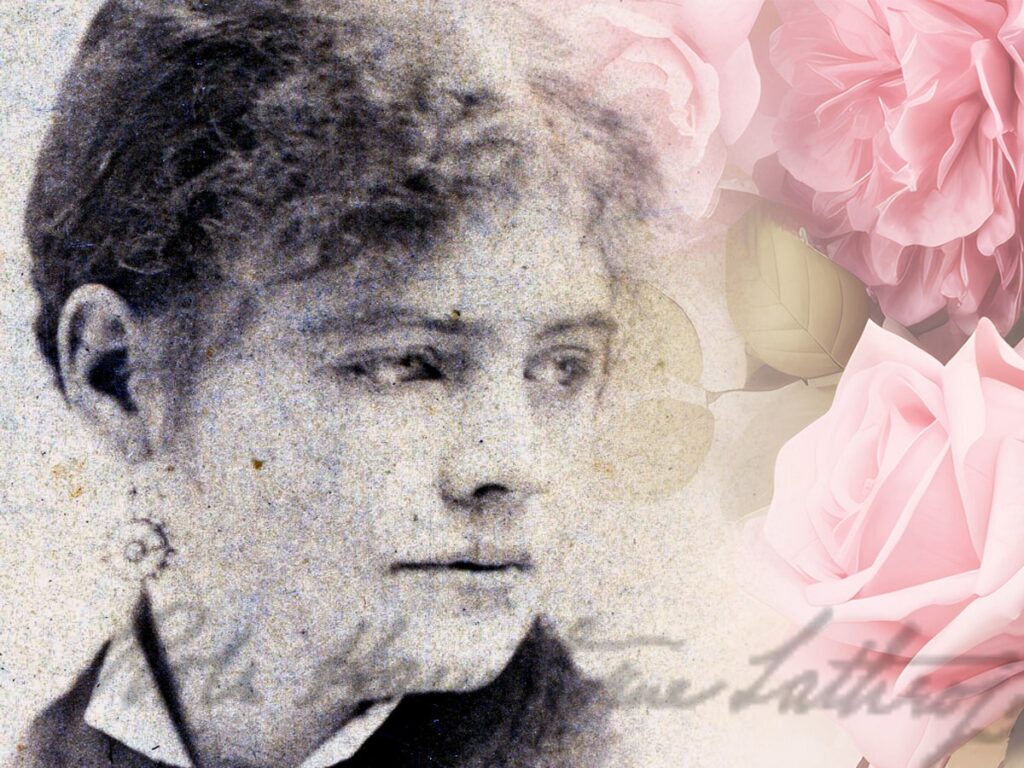
Little Pessima, Rosebud, Sweet Briar Rose, Mrs. George Lathrop, Mother Mary Alphonsa — and as of March 2024, Venerable Servant of God Rose Hawthorne. The youngest child of Nathaniel and Sophia Hawthorne was known by several names throughout her life, and her path to being recognized as a venerable servant of God was anything but straightforward. Like everyone, she experienced numerous joys and sorrows during her existence. We all seek love in various forms, and Rose was no exception. The true story of her life is how the love of God manifested in and through these experiences of joy and sorrow — guiding her from a nurturing New England upbringing to discovering her profoundest joy in embodying a unique kind of bride and mother — a partner of Christ and a spiritual caregiver to the afflicted poor in the tenements of New York City and the ridges of Westchester County.
Rose entered the world on May 20, 1851, as the third offspring of renowned writer Nathaniel Hawthorne and his extraordinary spouse Sophia (née Peabody). Both parents provided exceptional intellectual abilities and a commitment to learning for their offspring. Even more significantly, they presented their children with a model of profound affection and strong devotion to one another, creating a nurturing and joyful household. Theirs was a marriage of equals in spirit and mind, according to all reports.
A happy childhood
Upon Rose’s arrival, her family had recently relocated from Salem to Lenox, Massachusetts. Many years afterwards, in a letter for Rose’s 16th birthday, Sophia affectionately recounted those initial days:
… I do not know as there is yet any language in which I can convey to you an adequate idea of how I love you and have loved you since I first saw your tiny form. … Your babyhood was most lovely and sunny. Grandpa used to declare that you did not know how to cry. You showed the most philosophical patience in attaining your ends. If one way failed, you tried another way, and all in perfect quiet and repose. … This calm intent outlook which you maintained, before you could speak, won for you the title of Lord Chancellor the Dispenser of Equity. … You were very critical in your observations, and one day, when you did not fancy the appearance of Grandpapa, he could not induce you to pass over the described line, till he took out his watch, when with protesting, dignified air, you condescended to approach. I think you inherited from Papa this immitigable demand for beauty and order and right, though in the course of your development it could make you pettish and unreasonable. I was always glad you had it, because I know the impatience and crossness it often caused, would prove a transient phase. …
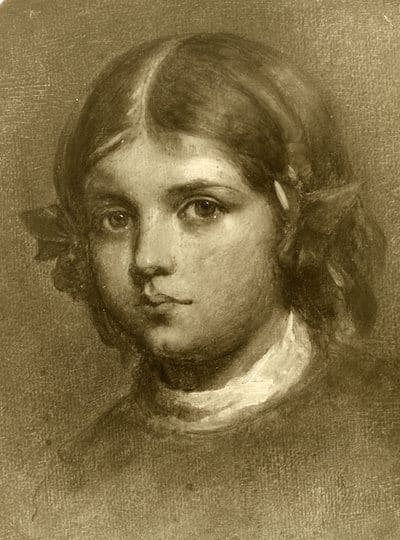
As can be observed from this correspondence, Rose was blessed with profoundly caring parents. Nathaniel was just as devoted to her in his messages and undoubtedly in his everyday interactions, although the acclaim of his most notable novel, “The Scarlet Letter,” along with his role as American consul, meant he spent less time with her compared to his older children. He affectionately referred to her as “Dear Little Pessima” and kindly admonished her when she struck her brother and sister at the age of 4. Another note commenced with, “MY DEAR LITTLE ROSEBUD,– I have placed a kiss for you in this lovely, clean piece of paper. I will fold it up with care, and I trust it will not fall out before it reaches (you).” When Rose turned 5, she composed her first letter to him. In large cursive script, she stated: “dear papa, darling, sweet, dear, I have written it. 1856. Rose.”
A new life abroad
In 1853, the family relocated to Liverpool, England, as Nathaniel commenced his new role as American consul. After five years, the family departed from England and journeyed across the continent, encompassing time in Italy, where Rose was deeply engaged in Catholicism. By 1860, they had returned to New England and established themselves once more in Concord at their former residence, the Wayside. Upon their re-entry into the United States, Nathaniel’s health started to deteriorate for reasons that were unclear. On May 19, 1864, the day preceding Rose’s 13th birthday, he passed away from this mysterious ailment, which some now suggest may have been stomach cancer. Following this heartbreaking loss of a cherished husband and father, Sophia endeavored to provide for her family, educate her children, and manage her own sorrow with a love and faith that was incredible. In her correspondence, she eloquently conveyed both her profound grief and her belief that she would reunite with him in the afterlife. Rose’s education was sponsored by a family acquaintance who, in exchange, appreciated the presence of young Rose during her studies. Sophia corresponded with her sister in 1868, “Rose is presently in (school), and Mary Loring’s assistance in this significant endeavor has alleviated a considerable worry and burden for me. For Rose is eager to learn, and it felt unkind not to provide her with an opportunity.” Sophia consistently recognized in her youngest daughter a thirst for understanding, beauty, and truth and supported her quest for these items. In the same correspondence for Rose’s 16th birthday, Sophia penned:
I knew that religious principle and sentiment would surely render you at last gentle and charitable to the shortcomings of your fellow mortals. … And this will lead you to the heights of being at last. Whereas if you were easy and indifferent, you might deteriorate, and lack the exquisite felicity which comes with the exquisite pain of a noble fastidiousness. … When we know ourselves, we can be kinder to ourselves, as well as more severe. I have always felt that it was most important for such a mind and character as yours that you should be truly religious. GOD alone can rule in your heart. … But you must have the highest motives for action. …
It is impressive to observe how intimately Sophia understood her youngest daughter and the profound way in which she offered guidance, support, and gentle feedback.
A difficult marriage
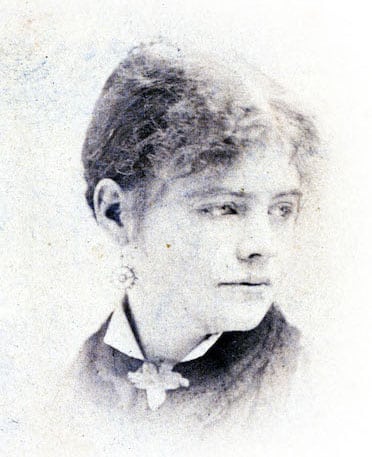
Due to financial constraints, Sophia chose to relocate with her kids to Dresden, Germany, in 1868. Her older children, Julian and Una, also required a shift in their environment following their troubled relationships. Rose was enrolled in a different school in Dresden, where she felt quite unhappy. Even though she did not particularly shine in painting or music she was studying, Dresden remained a significant experience in her life — she was reintroduced to Catholic culture, eloquently reflecting on how listening to the Stabat Mater affected her. It was also the place where her family developed a friendship with the Lathrops, another American family residing in Dresden, who had a son named George, the same age as Rose. In 1870, both families departed from Germany due to the onset of the Franco-Prussian War and relocated to London. However, tragedy struck the Hawthorne children again in 1871 when Sophia contracted typhoid pneumonia and passed away in February. Seven months later, to the astonishment of her family and his, Rose and George wed at St. Luke’s, an Anglican church in Chelsea. Since Julian’s initial intention was for George to travel back to America alongside both Una and Rose following their mother’s passing, the unexpected marriage and Una’s choice to stay in England enraged Julian and troubled the extended family as well. The Lathrops were not particularly thrilled about the development either, and thus, 19-year-old George and 20-year-old Rose embarked on their married life content in each other’s company but under a shadow that did not lift quickly or entirely over the years. The couple shared many interests — an enthusiasm for writing, fathers who had both held diplomatic positions, experiences abroad, vibrant intellects, and strong personalities — and undoubtedly, Rose wished for a marriage similar to that which her parents had cherished.
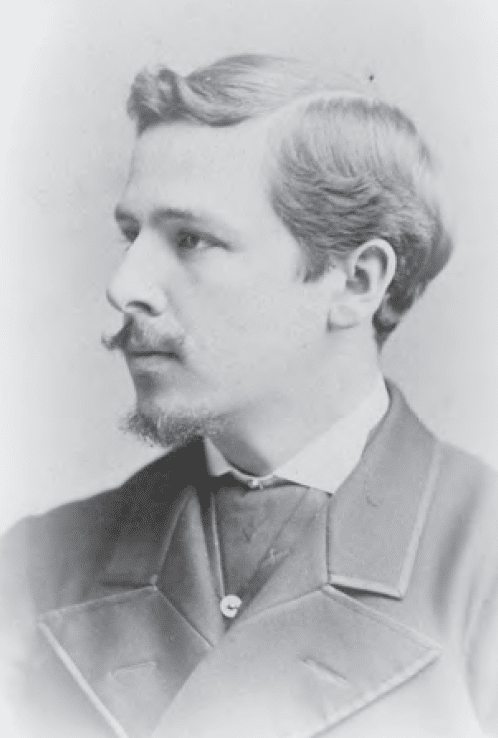
After returning to the United States, George and Rose began residing with his mother, then moved around frequently until they eventually made a home in Rose’s childhood residence, the Wayside. Their life as a couple was difficult despite their love for each other — George’s professional achievements came with regular job changes, numerous relocations, the arrival of their only child, Francis (“Francie”), in 1876, the passing of Rose’s sister, Una, in 1877, and the tragic loss of their son to diphtheria when he was just 4 years old in February 1881. His passing strained their marriage, which at times was severely tested by their powerful personalities and George’s battles with alcoholism. Though Rose never explicitly referred to anything beyond his “illnesses” in her correspondence and diaries, her niece, Hildegarde, articulated the situation more explicitly in a subsequent article, recalling, “After that tragedy (Francie’s passing) there was little hope left for them as a couple. In the months that followed, I grew closer to Aunt Rose than I had ever been before. … Yet for another twelve years George and Rose coexisted, arguing and reconciling, until George became so aggressive and perilous when intoxicated that eventually, his wife departed from him for good.”
Embracing Catholicism
Prior to the conclusion of their marriage, however, Rose and George astonished their friends and relatives by converting to Roman Catholicism together. There are no diary entries or extensive letters clarifying their choice, but George, likely articulating their shared viewpoint, passionately supported their decision in the newspapers of that time. The pair was guided by Paulist priest Father Alfred Young in Manhattan and were welcomed into the Catholic Church on March 19, 1891, at the Church of St. Paul the Apostle. Two days afterward, Archbishop Michael A. Corrigan of New York confirmed the couple, and they began their Catholic journey with a passion and fervor that is noteworthy. They engaged in a Catholic summer school, took part in public speaking events, and collaborated on writing a biography of the Georgetown Visitation convent. Both unwaveringly embraced their Catholic beliefs, as reflected in Rose’s journals and correspondence, showcasing an openness to all the Catholic practices that were prevalent at the time, an endeavor to learn and embody the liturgical calendar of the Church and a profound affection for the sacramental existence. She additionally sincerely and regularly conveyed the wish to assist. A concise yet revealing journal note states, “Prayed at the Memorare that my life might become a willing sacrifice.” She developed an increasing fixation on dedicating her life to God and those in need. Her recently discovered faith along with the surrounding culture and society — teeming with new settlement houses, charitable entities, and concern for immigrants — certainly shaped her views. In the publication regarding the Georgetown Visitation convent and in various other texts, we can also observe her respect for individuals, both women and men, dedicated wholly to God. Nevertheless, there are no signs in her own writings or those of others that suggest this regard for religious and priests prompted her to contemplate ending her marriage. Instead, we observe in the newly transformed Rose a yearning for her existence, in whichever manner she experienced it, to be completely under the service of God.
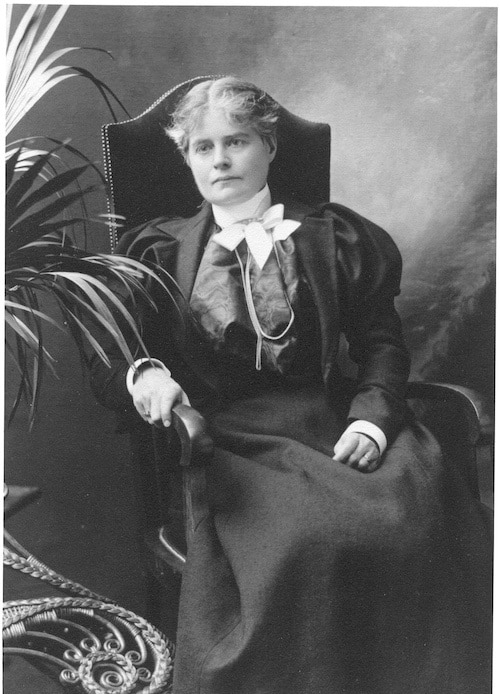
Unfortunately, by 1895, the strain and George’s battles with alcoholism had grown overwhelming. Rose requested and received permission from the bishop for a separation. While they did not legally divorce, they began living apart from that point forward. She makes it evident during this time that if the bishop advised her to remain with her husband, she would comply. Nevertheless, she confesses to feeling unsafe and shows worry for George. She believed that staying together would not serve his soul’s best interest. Her sorrow was genuine, yet the choice turned out to be conclusive. In the subsequent months, she withdrew for a retreat and spent time with Julian and his family. By the summer of 1896, we observe her embarking on what would evolve into the most renowned and all-consuming period of her life — caring for the impoverished sick, particularly those suffering from terminal cancer.
Transforming into Mother Mary Alphonsa
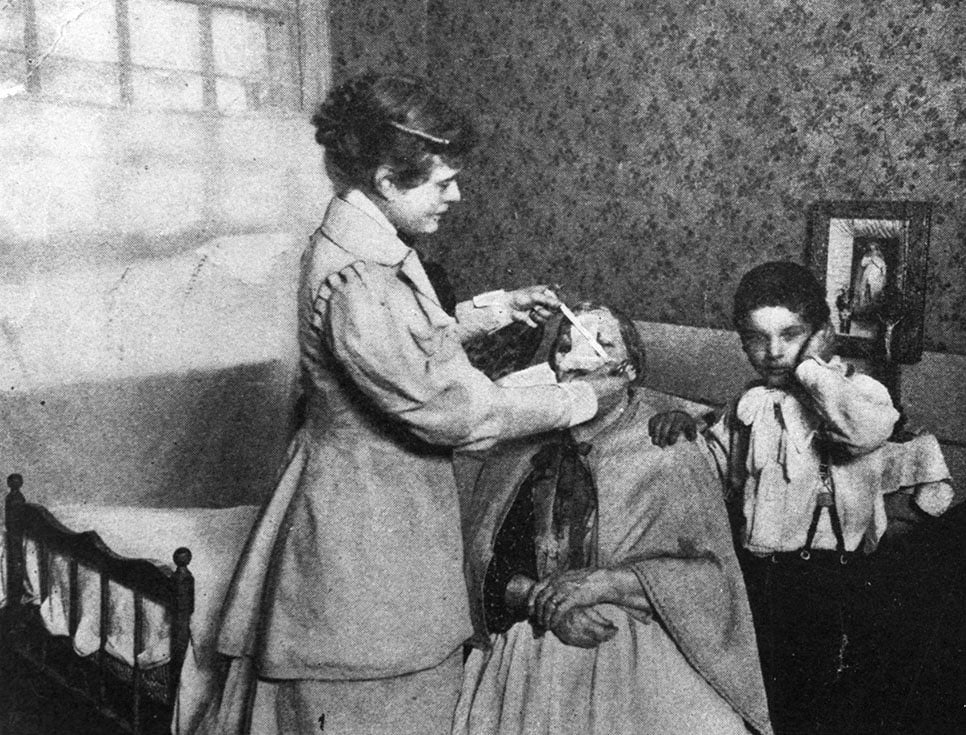
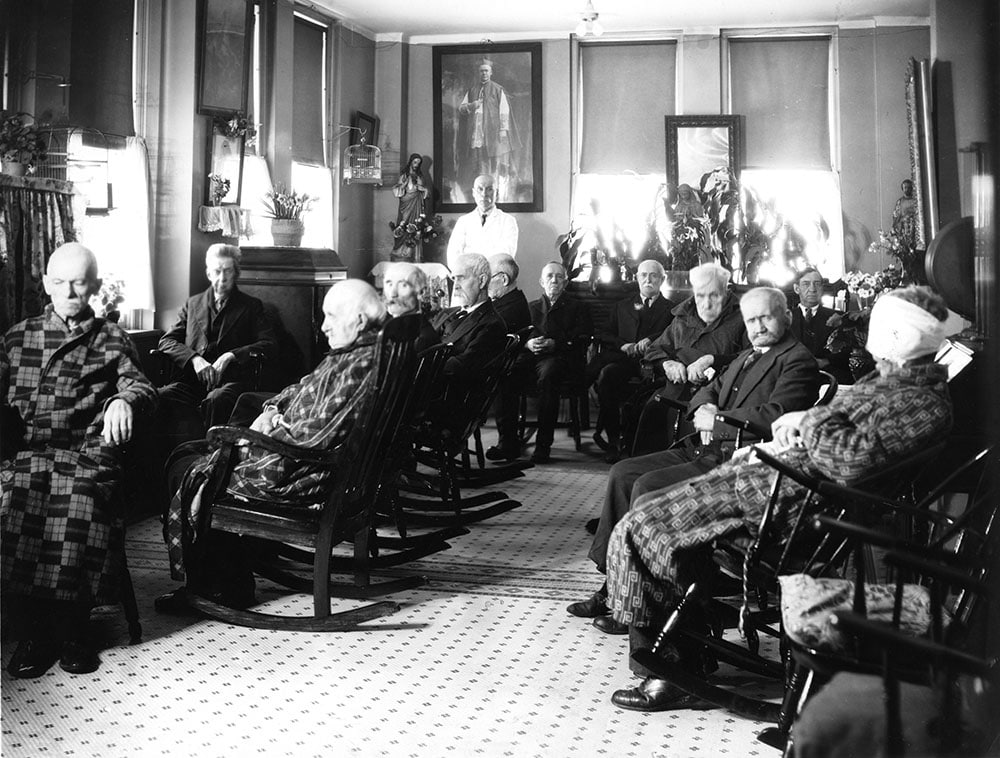
Following George’s passing in 1898, Rose founded St. Rose’s Free Home for Incurable Cancer in homage to St. Rose of Lima, located in New York. Two years afterward, in 1900, she secured permission to create her order, which is currently recognized as the Dominican Sisters of Hawthorne, Congregation of St. Rose of Lima.
The timeline and historical account of the inception of Rose’s new career has been elegantly portrayed in numerous articles and publications, particularly following the recent announcement from the Vatican that she is now esteemed. The facts alone make for an incredible tale, but here I prefer to allow Mother Alphonsa to express herself. For numerous years, she authored a periodical titled “Christ’s Poor,” which informed the public about her actions and the motivations behind them. Her commitment, devotion, and affection for Christ and the needy shine through remarkably from her own writings. In a 1897 newspaper request to increase public consciousness of her work, she articulated her objectives clearly:
I am trying to serve the poor as a servant. I wish to serve the cancerous poor because they are avoided more than any other class of sufferers; and I wish to go to them as a poor creature myself, through powerful to help through the open-handed gifts of public kindness, because it is by humility and sacrifice alone that we become worthy to feel the holy spirit of pity, and to carry into the disordered of destitute sickness the cheerful love we have gathered from the Heavenly Kingdom for distribution.
Caring for the ill impoverished
In “Christ’s Poor,” published in 1902, she contemplated her initial encounters with the labor and the truths of those formative days of service. She often urged individuals to contribute in any way they could, encouraging them not to hesitate in assisting the sick impoverished:
When I first visited the sick I fancied that a trial of my skill and ability would lead to my prompt dismissal from the field by my poor friends. Now I see that I can be of such profound help, that I do not know what form of dismissal would get rid of me. But the sick do not by any means discourage me from coming. Every day is made beautiful by gratitude and welcome so genuine and strong with true life that I seem to be brushed aside by One who says: “I am here!” It is a privilege, is it not, to be near such vivid hope and love?
At times, she was more straightforward, tackling the issue of why more individuals did not assist their less favored neighbors or why they turned a blind eye to the struggles of the sick poor. She never sugar-coated her disdain for those who declined to aid the ill. Having triumphed over fear, doubt, and disgust herself, she believed that others could and ought to make the same effort — thus, gaining the same spiritual rewards that she encountered by meeting and serving Christ in the impoverished.
She expressed it plainly: “We need to love them (the impoverished sick). The saints embraced the feet of the poor. They didn’t just appear to do it; they truly did.”
An emphasis on Our Lady and the Eucharist
Two essential components of her nascent community, which remain fundamental to this day, were a devotion to Our Lady and the importance of the Eucharist. She observed the sisters, this small group of women devoted to God in aid of the ailing underprivileged, as the women situated at the base of the cross. She expresses what this signified for her — to remain beside Mary — in an article she wrote that was released after her passing:
Children of Mary! Do they sometimes elect to stand by the Mother at the foot of the Cross? Not driven there by circumstances, but eagerly turning with the warm glow of the heart which comes from the holy impulse, the first real recognition of the great loveliness of Christ. Mary, the Mother, is there; she has crucified herself; she is happier there than she could be in the splendors of the city; her life is happiest near Jesus … and after His Death, she will be where the suffering and spiritual needs of human beings would have brought Him. … We know that Mary visits every abode of sorrow and suffering, and shall we fear to accompany the Immaculate Queen of Heaven when she invites us, by that warm glow of inspiration, of which the Child of Mary knows at least a faint touch, if not a rich abundance.
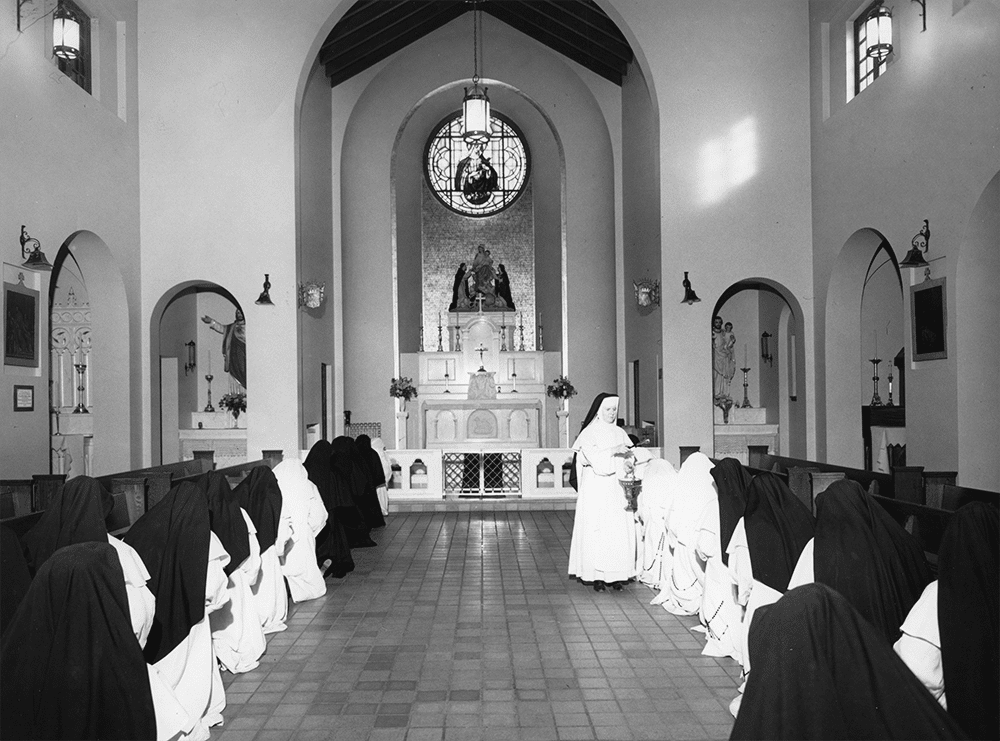
From her initial experiences as a Catholic, she possessed a profound affection for the Eucharist. She was aware that this little community and its mission could not thrive without our Eucharistic Lord being at the heart of it. This feeling is evident in a letter she penned to Alice Huber (by this time known as Sister Mary Rose):
This is a wonderful day. Our Blessed Lord has for the first time granted to this community the greatest of blessings (all-day adoration on First Friday) to its hours, to its visible offerings, and the greatest dignity to its outward observance. As I knelt during the first adoration, I could not but feel the difference to our whole being as a work, a group of enchained laborers, now that this glorious privilege (of adoration) has been given to us. You must come, and let successively your women come, on First Fridays to this chapel, or else manage to have the privilege at St. Rose’s Home. There is no describing the difference it makes.
A life of service
Since she began her vocation, Rose — or Sister Mary Alphonsa, as she was permitted to publicly take her vows as a Dominican sister on December 8, 1900 — never hesitated and dedicated all her efforts to both the community and uplifting the spirits of the patients, making their lives bright and filled with the peace of Christ. It is improbable that she ever envisioned having her case for canonization open, yet her aspiration was heaven. She articulated, “The entire purpose of the community is to prepare its members for the Beatific vision.” And she was convinced that, through devoted service to God, we could all attain saints. She penned with great elegance:
Shall we try to find a better course for the ennobling of our souls than that laid out by Christ? … There can be no fervor without sacrifice; and the greater the sacrifice the greater the fervor. Since this heat is required of us, before we can serve God, the sacrifice is imperative; and a holocaust of all that we can sacrifice, because the Master we serve deserves great offerings; He shall have the greatest fervor and the work possible for us to offer Him.
Consecration means perseverance. The ‘ships are burned.’ Look back through history, and if you look into the historic literature of the Church, you will see what it means for a people to be consecrated to God. He asks us to be humble and meek; to remember that we are dust; and as we prostrate ourselves to offer Him all that we are, we find the sick poor at our side. …
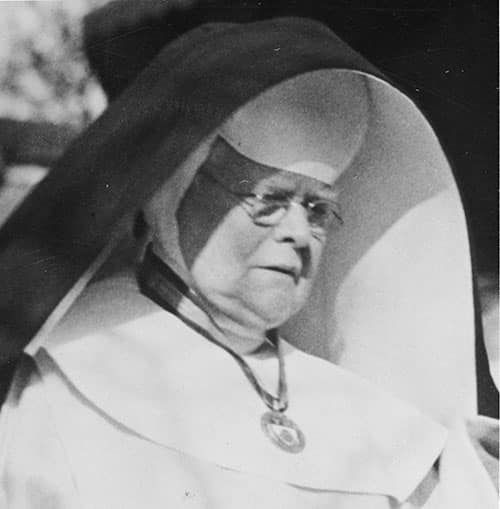
Following three decades of devotion to the ailing Christ in the impoverished afflicted by cancer, Mother Mary Alphonsa passed away unexpectedly yet calmly on July 9, 1926 — the 84th anniversary of her parents’ marriage. This date, beyond just being poetic, appears to symbolize that through her dedicated life, she discovered and exceeded what her parents had achieved. As the bride of Christ, she encountered a love that nourished her heart, her intellect, and her spirit, elevating her to a higher existence than what any human love alone could offer — a life characterized by heroic love.