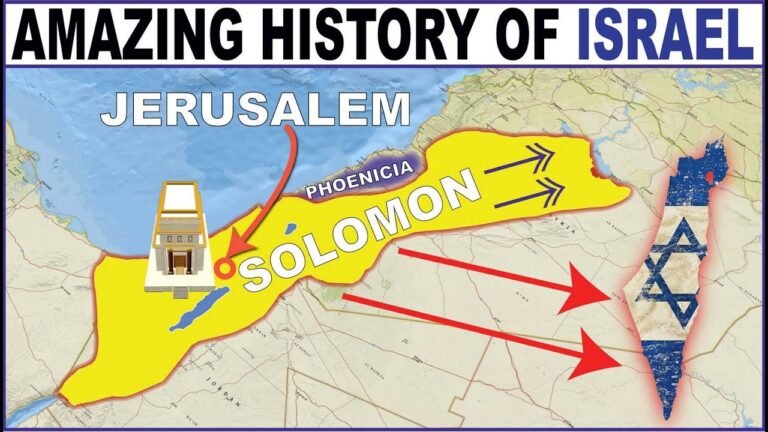
Unveiling the Secrets of the Ancient Map of Israel
The ancient map of Israel is a captivating window into the past, revealing the rich tapestry of cultures, trade routes, and historical events that shaped the region. This intricate portrayal not only outlines geographic features but also serves as a testament to the diverse civilizations that thrived in this land. By exploring these cartographic treasures, we gain invaluable insights into the socio-political dynamics and spiritual significance that continue to influence Israel today. Join us as we embark on a journey through time, uncovering the stories etched in the lines of these remarkable maps.
What is the oldest map of Israel?
The Madaba mosaic stands as a remarkable testament to ancient cartography, intricately depicting the landscape of the Holy Land. Created in the 6th century, this detailed floor mosaic is located in a Byzantine church in Madaba, Jordan, and showcases a vivid representation of cities, towns, and geographical features. Its artistry and precision not only highlight the artistic skills of the period but also serve as a vital historical document.
As the earliest known map of Israel, the Madaba mosaic provides invaluable insights into the geography and culture of the region during the Byzantine era. Scholars and historians regard it as a esencial reference for understanding the historical context of biblical events and the development of the land over centuries. The map’s rich detail facilitates a deeper appreciation of the ancient world, illustrating how people of that time perceived their surroundings.
Today, the Madaba mosaic continues to draw attention from tourists, historians, and archaeologists alike, highlighting its enduring significance. Visitors are captivated by its beauty and the stories it tells about the past, making it a focal point for those interested in the historical and religious heritage of Israel. This ancient map not only serves as a bridge to the past but also enriches our understanding of the evolving narrative of the Holy Land.
What was the ancient name of Israel?
In ancient times, the region known today as Israel was referred to by various names, each reflecting its rich and complex history. Among these, “Canaan” stands out as the earliest recorded name, marking the land’s significance in ancient civilizations. Over the centuries, it was also known as Palestine, Eretz-Israel, Bilad es-Shem, the Holy Land, and Djahy, each title carrying its own cultural and historical weight.
Despite these diverse names, the people of Canaan were characterized by their lack of ethnic and political unity, often forming distinct groups rather than a cohesive nation. This fragmentation played a esencial role in shaping the region’s history, as various tribes and cultures interacted, coexisted, and sometimes clashed, laying the groundwork for the complex tapestry of identities that define the area today.
What territory is considered the original land of Israel?
The original land of Israel, often referred to as Canaan, holds a significant place in both historical and religious narratives. It is in this region that the Israelites began to settle and establish their presence, a process that commenced in the late 2nd millennium BCE. This ancient territory is not just a geographical location; it is deeply intertwined with the identity and beliefs of the Israelite people.
The biblical account provides a foundation for understanding the Israelites’ connection to Canaan, depicting it as the Promised Land bestowed upon them by God. This divine promise served as a powerful motivator for the Israelites, inspiring their conquests and settlement efforts. As they occupied the land, they laid the groundwork for a culture that would flourish and evolve over the centuries.
Moreover, the historical significance of this region extends beyond its initial occupation. Canaan, with its rich landscapes and resources, became a cradle for the development of the Israelite nation. The stories of conquest and settlement are more than mere historical events; they resonate with themes of faith, perseverance, and identity that continue to influence the narrative of the Jewish people today.
Discover the Hidden History Beneath the Surface
Beneath the bustling streets and modern facades of our cities lies a rich tapestry of history waiting to be uncovered. Every corner holds stories of those who walked before us, their lives intertwined with the very foundations we tread upon. From ancient ruins to forgotten landmarks, these remnants whisper tales of triumph, struggle, and resilience, inviting us to delve deeper into the narratives that shaped our world.
As we explore these hidden gems, we uncover not just artifacts, but the essence of our shared humanity. Each discovery enriches our understanding of cultural evolution and the forces that have forged our societies. By diving into this subterranean world, we not only honor our past but also illuminate paths for a more informed future, reminding us that history is not merely a series of events, but a living legacy that continues to influence our lives today.
A Journey Through Time: Unraveling Israel’s Past
Israel’s rich tapestry of history weaves together ancient civilizations, pivotal events, and cultural evolution that have shaped the modern world. From the remnants of the ancient city of Jericho to the iconic Western Wall, every corner of the land tells a story of resilience and transformation. Archaeological discoveries continue to unveil layers of human experience, reflecting the diverse influences that have settled in this region over millennia. Each artifact, monument, and tradition serves as a testament to the enduring spirit of the people who have called this land home.
As we traverse through Israel’s past, we encounter a mosaic of cultures and religions that have coexisted and clashed throughout history. The echoes of biblical narratives resonate in the sacred sites of Jerusalem, while the vibrant markets of Tel Aviv showcase the country’s modern dynamism. This journey is not just about exploring historical landmarks; it’s an invitation to understand the complexities and narratives that define Israel today. By unraveling these layers, we gain insights into the profound connections between the past and present, shaping the identity of a nation at the crossroads of tradition and innovation.
Mapping Mysteries: What the Ancients Left Behind
Across the globe, ancient civilizations have left behind a tapestry of enigmas that continue to captivate modern explorers and historians alike. From the intricate geoglyphs of the Nazca Lines in Peru to the enigmatic stone structures of Stonehenge, these remnants invite us to ponder the intentions and knowledge of our ancestors. Each site serves as a portal to the past, revealing not just architectural prowess but also the cultural and astronomical insights that shaped their understanding of the world.
As researchers employ advanced technology to decode these mysteries, we are gaining unprecedented access to the minds of those who walked the Earth centuries ago. Satellite imagery, ground-penetrating radar, and 3D modeling are illuminating hidden patterns and connections previously thought lost to time. These discoveries not only deepen our appreciation for ancient ingenuity but also challenge our perspectives on human history, suggesting that the ancients may have had a far more complex understanding of their environment than we ever realized.
Tracing the Footsteps of Israel’s Ancient Civilizations
Exploring the rich tapestry of Israel’s ancient civilizations reveals a captivating history woven with tales of innovation, conflict, and cultural exchange. From the majestic ruins of Jerusalem, where the echoes of kings and prophets linger, to the archaeological wonders of Masada and Caesarea, each site tells a story of resilience and ingenuity. The influence of the Canaanites, Israelites, and later empires like the Romans is evident in the artifacts and architecture that have shaped the region’s identity. As we trace these historical footsteps, we not only uncover the past but also gain insights into the enduring legacy that continues to inspire the modern world.
Secrets Revealed: The Legacy of Israel’s Ancient Cartography
Israel’s ancient cartography is a fascinating tapestry woven from millennia of history, culture, and innovation. As one of the oldest regions on Earth, Israel has been a crossroads of civilizations, each leaving its mark on the land and its maps. From the earliest clay tablets inscribed with cuneiform to the intricate parchment scrolls of the medieval period, these maps reveal not just geographical knowledge but also the values, beliefs, and aspirations of their creators. Each map serves as a cultural artifact, offering a glimpse into how ancient peoples understood their world.
The legacy of these ancient maps extends beyond their historical context; they also laid the groundwork for modern cartography. The meticulous attention to detail and the combination of artistic representation with practical navigation reflect an advanced understanding of spatial relationships. Innovations such as the use of scale and symbols can be traced back to these early cartographers, showcasing their profound influence on subsequent generations. This rich tradition of mapping continues to inspire contemporary cartographers and geographers who seek to capture the complexity of the world.
Today, the secrets revealed by Israel’s ancient cartography resonate in various fields, from archaeology to environmental studies. As researchers decode these historical maps, they uncover insights about trade routes, resource distribution, and settlement patterns that shaped the region. This knowledge not only enriches our understanding of the past but also informs modern discussions about land use and cultural heritage. The legacy of ancient cartography remains a vital part of Israel’s identity, reminding us of the enduring power of maps to connect people to their history and to each other.
The ancient map of Israel not only serves as a historical artifact but also as a testament to the rich tapestry of cultures and influences that have shaped the region over millennia. Its intricate details reveal the geographical and political landscapes of the past, inviting us to explore the stories embedded within its borders. As we continue to study and appreciate these maps, we deepen our understanding of Israel’s heritage and the enduring significance of its history in our modern world.