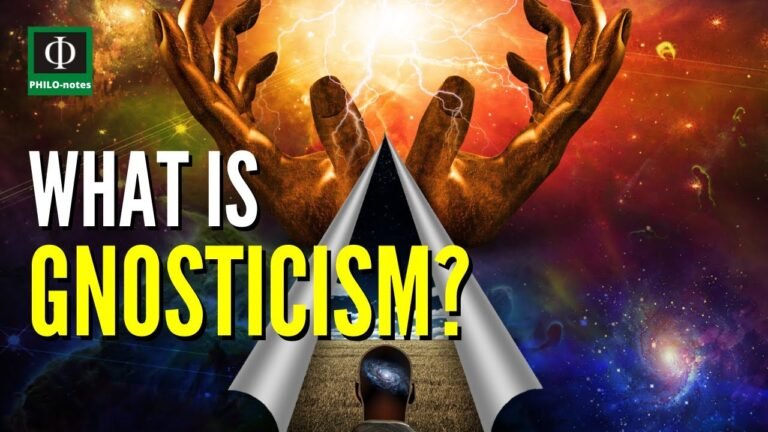
Understanding Gnostics: A Definition and Overview
The term Gnostics refers to a diverse group of ancient religious thinkers who believed that spiritual knowledge, or gnosis, was the key to salvation. Emerging in the early centuries of Christianity, Gnostics challenged orthodox teachings by emphasizing personal spiritual experiences over established doctrines. Their writings, often rich in symbolism and mysticism, reveal a world filled with hidden truths and divine secrets. Understanding the Gnostics’ definition and beliefs not only sheds light on early Christian thought but also invites contemporary readers to explore the deeper dimensions of faith and knowledge.
Advantages
- Gnostics offer a unique perspective on spirituality and the nature of existence, emphasizing personal experience and inner knowledge.
- Their teachings encourage critical thinking and questioning of established beliefs, fostering intellectual growth.
- Gnostic texts often provide alternative interpretations of religious narratives, enriching the understanding of historical and spiritual contexts.
- The emphasis on personal enlightenment in Gnostic practices can lead to greater self-awareness and emotional healing.
- Gnostic traditions promote the idea of a direct connection with the divine, empowering individuals in their spiritual journeys.
Disadvantages
- Limited Historical Understanding: The gnostics’ beliefs and texts often prioritize esoteric knowledge over historical context, which can lead to a skewed understanding of early Christianity and its diverse thought.
- Potential for Elitism: The emphasis on secret knowledge can foster an elitist mindset, suggesting that only a select few possess the truth, which may alienate broader communities and discourage inclusive dialogue.
- Fragmentation of Beliefs: Gnosticism encompasses a wide range of sects and interpretations, leading to inconsistencies and disagreements that can complicate the understanding and application of its teachings.
What are the beliefs of the Gnostics?
Gnostic beliefs center around the idea that true salvation is attainable through knowledge, rather than mere faith. This emphasis on esoteric understanding sets Gnosticism apart from many mainstream religious practices, which often prioritize belief systems. Gnostics argue that enlightenment is achieved by uncovering hidden truths about the divine and the self, leading to a more profound spiritual awakening.
At the core of Gnostic philosophy lies a dualistic worldview, positing that the universe is governed by two opposing forces: good and evil. This duality reflects the inner struggles faced by humanity, as well as the broader cosmic conflict. Gnostics perceive the material world as a flawed creation, suggesting that it is an imperfect reflection of a higher spiritual reality. This perspective fosters a sense of detachment from the physical realm, as the focus shifts toward transcending the limitations of the material.
Furthermore, the Gnostic interpretation of the creator-divinity is decisivo to their beliefs. They contend that while a divine being is responsible for the creation of the world, this creator is not wholly good or perfect. This view challenges conventional notions of divinity and invites adherents to seek deeper insights into the nature of existence. Ultimately, Gnosticism encourages a quest for knowledge that empowers individuals to reclaim their spiritual autonomy and navigate the complexities of life.
In what ways does Gnosticism differ from Christianity?
Gnosticism and Christianity represent two distinct spiritual paths, differing primarily in their understanding of the divine. Gnostics embraced a dualistic worldview, believing in multiple gods and emphasizing the importance of knowledge as a means to transcend ignorance. In contrast, Christianity is rooted in monotheism, advocating the worship of a singular God and emphasizing faith as the pathway to redemption.
While both traditions acknowledge the role of a redeemer, their ultimate goals diverge significantly. Gnostics aimed to liberate themselves from the constraints of ignorance, seeking enlightenment through esoteric knowledge. Christians, however, focused on the concept of sin and the necessity of salvation, striving to cultivate a relationship with God through grace and repentance. These fundamental differences highlight the unique philosophical and theological landscapes of each belief system.
What is the Gnostic perspective on Jesus?
Gnostics hold diverse views on Jesus, seeing him as a pivotal figure in their spiritual journey. Some regard him as the incarnation of the supreme being, sent to impart gnōsis, or knowledge, to humanity. In contrast, others reject the notion of his divine incarnation, portraying him instead as a human who achieved enlightenment and sought to guide his followers toward the same realization. This spectrum of beliefs highlights the complexity of Gnostic thought, where the pursuit of deeper understanding shapes the interpretation of Jesus’ role in the spiritual landscape.
Unveiling the Mysteries of Gnosticism
Gnosticism, an ancient belief system that flourished in the early centuries of Christianity, invites us to explore the profound questions of existence and spirituality. At its core, Gnosticism emphasizes personal knowledge and inner experience over dogma and external authority. This quest for gnosis, or spiritual enlightenment, reveals a dualistic worldview that contrasts the material and spiritual realms, suggesting that true understanding lies in transcending the physical world to connect with a higher divine reality.
Central to Gnostic thought is the belief in a hidden divine spark within each individual, which can be awakened through introspection and mystical practices. This inner journey is often depicted as a struggle against the ignorance imposed by a flawed material world, represented by a lesser deity or demiurge. Through various texts and teachings, Gnostics encourage seekers to liberate themselves from the constraints of conventional beliefs, advocating for a transformative experience that leads to self-discovery and deeper spiritual truths.
The enduring intrigue of Gnosticism lies in its rich tapestry of symbolism, mythology, and philosophical insights. By examining its texts—such as the Nag Hammadi library—scholars and spiritual seekers alike uncover layers of meaning that challenge mainstream religious narratives. As we delve into the complexities of Gnosticism, we are reminded of the power of individual exploration and the timeless quest for knowledge that transcends boundaries, inviting us to question and redefine our understanding of the divine.
Key Concepts and Beliefs Explored
In today’s rapidly evolving world, understanding the foundational concepts and beliefs that shape our societies is more important than ever. At the heart of many discussions lies the interplay between individual freedom and collective responsibility. This dynamic prompts us to consider how personal choices impact the community as a whole, fostering a dialogue that emphasizes the importance of empathy and shared values. By exploring these intersections, we can cultivate a deeper awareness of our roles within larger social frameworks.
Another essential aspect is the pursuit of knowledge and truth. Throughout history, societies have grappled with varying interpretations of reality, often influenced by cultural, philosophical, and scientific perspectives. In this quest for understanding, critical thinking becomes a vital tool, enabling individuals to navigate misinformation and develop informed opinions. The commitment to seeking truth not only enriches personal growth but also strengthens the foundations of democracy and civil discourse.
Lastly, the concept of resilience emerges as a powerful belief that underpins our ability to adapt and thrive amidst challenges. Whether in the face of personal adversity or global crises, the human spirit’s capacity for resilience inspires hope and innovation. By embracing this concept, we empower ourselves and others to confront obstacles with courage and creativity. Ultimately, these key concepts and beliefs form a tapestry that guides our actions and decisions, shaping a brighter future for all.
A Journey Through Gnostic Thought
Gnostic thought invites us into a rich tapestry of spiritual exploration, where knowledge becomes the key to liberation. Rooted in the belief that the material world is flawed and deceptive, Gnosticism encourages seekers to delve deeper into the mysteries of existence. At its core, this ancient philosophy emphasizes the pursuit of inner wisdom, asserting that true enlightenment lies beyond the surface of conventional beliefs and societal norms.
Central to Gnostic teachings is the idea that each individual possesses a divine spark, an inherent connection to a higher reality. This notion empowers individuals to embark on a personal journey of discovery, seeking the truths hidden beneath layers of ignorance and illusion. Through introspection, meditation, and the study of sacred texts, practitioners are urged to awaken this latent potential, transforming their understanding of self and the cosmos.
As we navigate the complexities of Gnostic thought, we uncover a profound message: the path to authenticity and spiritual fulfillment is a personal quest. Embracing the duality of existence allows us to reconcile our earthly experiences with our quest for transcendence. Ultimately, Gnosticism serves as an invitation to challenge our perceptions, ignite our curiosity, and embark on a transformative journey toward inner knowing and cosmic unity.
The Historical Context of Gnosticism
Gnosticism emerged in the early centuries of the Common Era, a time when diverse philosophical and religious ideas were flourishing amidst the backdrop of the declining Roman Empire. This mystical belief system drew from various sources, including Hellenistic thought, early Christianity, and ancient Eastern religions, reflecting a collective quest for deeper spiritual understanding. Gnostics posited that salvation comes through gnosis, or esoteric knowledge, which revealed the divine spark within each individual, often contrasting sharply with orthodox teachings that emphasized faith and communal rituals. As the political and cultural landscape shifted, Gnosticism faced persecution from emerging orthodox Christians, leading to a rich tapestry of texts and ideas that would influence later mystical and philosophical movements, leaving an indelible mark on the spiritual history of the West.
Understanding the gnostics definition opens a fascinating window into early Christian thought and spirituality. Their emphasis on personal knowledge and inner wisdom challenges conventional religious frameworks, inviting deeper exploration of the divine within. As we continue to unravel these ancient beliefs, we gain valuable insights into the diverse tapestry of human understanding and the quest for meaning that transcends time and tradition.