Invoke these saints of Ukraine as we pray for peace
Invoke these saints of Ukraine as we pray for peace

Since Russia’s invasion of Ukraine commenced in the early hours of Feb. 24, the globe has observed in shock at this completely unjustified incursion. For the typical observer, it appears that there’s little action we can take. Reach out to elected representatives, maybe? But with what message? The remedy proposed in a persuasive Twitter thread? All our findings seem inadequate, and our voices appear too faint.
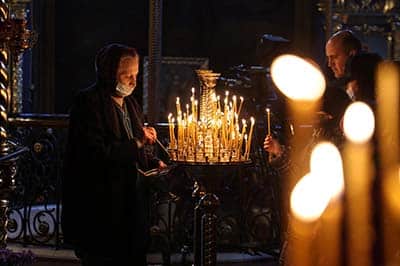
Thankfully, taking concrete steps in this world isn’t our sole choice. We can contribute and advocate and elevate marginalized voices, indeed. And we should. Yet as Christians, we understand that our prayers possess strength. Their power increases when supported by our heavenly advocates. Instead of turning away from the injustices occurring in Ukraine, instead of simply observing with a feeling of helplessness, let’s seek the intercession of the saints of Ukraine — individuals who are familiar with the hearts of the Ukrainian populace (some of whom have experienced the threats of Russian hostility firsthand). While there are numerous saints, the narratives that follow will offer an introduction to these remarkable individuals of profound faith.
St. Olga of Kyiv
 St. Olga (d. 969) was the monarch whose faith ultimately led the nations of Russia, Belarus, and Ukraine to Christ. Hailing from present-day Russia, Olga was wed to Prince Igor I of Kyiv (currently the capital of Ukraine). Olga exhibited the same brutality and tyranny as her spouse, and following his death, she governed with a strong hand on behalf of her 2-year-old son, Sviatoslav. To safeguard her reign (and his), Olga cultivated in him a nature that was ruthless and shrewd — a tactic that proved ineffective when she unexpectedly became a devout Christian and realized her son was resistant to conversion.
Olga never intended to embrace Christianity; even on the occasion of her baptism, it seems that her decision was mainly tactical, as she competed for dominance among Christian rulers in the area. However, in the instant of her baptism, she encountered extraordinary grace and went back to her people with a desire to lead them to Jesus. Yet, despite her words and the missionaries she invited into the nation, Olga was unsuccessful, facing the repercussions of her past filled with cruelty and violence. When she passed away, she remained one of the few Christians in the land. Nonetheless, from her heavenly position, she advocated for others. Although her son did not come to know Jesus during his lifetime, her impact (both in life and death) on her grandson, St. Vladimir of Kyiv, resulted in the conversion of her entire nation and earned Olga the title of Equal to the Apostles.
St. Vladimir of Kyiv
 St. Vladimir (958-1015) served as the grand prince of Kyiv and leader of the Kievan Rus’. Referred to as Vladimir the Great, he was the grandson of St. Olga of Kyiv. Following the death of his father (the prince), Vladimir (the unrecognized son of a housekeeper) was not positioned to inherit the throne. His sibling, Yaropolk, assumed power and subsequently murdered their other brother, Oleg, which compelled Vladimir to escape the territory. He returned after four years and seized control of the country from his brother, ruling for eight years as a pagan monarch, with a retinue of 800 concubines.
However, Vladimir craved more and dispatched envoys across the globe to study the prominent world religions and report their findings. The envoys sent to the Christians in Constantinople conveyed: “We could not tell whether we were in heaven or on Earth. … We only know that God resides there among the people, and their worship is more beautiful than the rituals of other nations.” Persuaded, Vladimir underwent baptism, wed a Byzantine princess, and returned to Kyiv to dismantle pagan idols, construct Christian churches, and urge all his people to receive baptism. Alongside his grandmother, he is recognized for introducing the Christian faith to the Ukrainian, Belarusian, and Russian peoples and is referred to as “Equal to the Apostles.”
St. Josaphat Kuntsevych
 St. Josaphat Kuntsevych (1580-1623) was a Polish-Lithuanian individual born in present-day Ukraine into a Ruthenian Orthodox family. In 1598, the Union of Brest allowed certain Ruthenian eparchies (dioceses) to unite with Rome while maintaining their own Eastern rites. Josaphat was part of what is currently known as the Ukrainian Greek Catholic Church (previously the Ruthenian Uniate Church), and a few years afterward, he joined a Catholic monastery in what is now Lithuania. He eventually became an archimandrite (abbot) and later an archeparch (archbishop) of Plotsk.
As archeparch, he endeavored to unite all those under his authority in complete communion with Rome (although many were wary that such harmony might erode the splendid Byzantine essence of their belief). His efforts toward unity earned him considerable animosity in some circles — where he was denounced for having “gone Latin” — and he was brutally murdered by a crowd while visiting present-day Belarus in an effort to lead the local population to the Catholic Church.
St. Zygmunt Szcesny Felinski
 St. Zygmunt Szcesny Felinski (1822-95) was born in what is now Ukraine to a distinguished Polish family during a period when Poland was not independent. His father passed away when he was just 11 years old; at the age of 18, his mother was sent into exile in Siberia due to her pro-Polish beliefs. Zygmunt was actively engaged in an unsuccessful uprising against Russia (after obtaining degrees in mathematics and French literature and prior to becoming a diocesan priest).
Following numerous years as a priest and philosophy instructor, Father Felinski was appointed as the archbishop of Warsaw. With his appointment sanctioned by Moscow, Polish nationalists held reservations about him, but Archbishop Felinski fervently advocated for the right of nations to exist independently and ultimately corresponded with the czar, requesting autonomy for Poland. He had been in Warsaw for a mere 14 months before being exiled to Russia for 20 years. Upon his release, he was relocated to contemporary Ukraine to spend the remainder of his life in semi-exile, dedicating himself to the service of Ukrainian and Polish Catholics.
Blessed Mykola Konrad
 Blessed Mykola Konrad (1876-1941) was born into a working-class family and eventually became both a priest and an academic. He penned responses to Ivan Franko’s criticism of the creation doctrine, although he faced disdain from many for challenging this prominent intellectual. The kind-hearted Father Konrad had a deep affection for children and worked as an educator, dedicating many years to teaching in schools and universities while raising four children with his wife. He authored numerous articles and instructed on sociology and philosophy, ultimately rising to the position of dean of the philosophy faculty at the Lviv Theological Academy. He accomplished all this amid the political unrest of the era, which at times resulted in Father Konrad being imprisoned for his beliefs.
He established a student group that adopted the motto “Ukraine for God” (in contrast to the secular motto of “Ukraine above all” which was widely embraced at the time). However, when Soviet forces entered Lviv in 1939, Father Konrad lost his position. With no means of support, he and his family had to leave the city to live with his sister. On their journey, they passed through the village of Stradch, where the locals (thinking he was escaping the country) urged him to consider their plight, left without a priest and without options to flee. Thus, the distinguished scholar became the pastor of a small village, where he met Blessed Volodymir Pryjma (1906-41), a Ukrainian husband and father, as well as a trained Byzantine cantor and church choir director.
Just four days following the invasion of the Soviet Union by Nazi Germany, Father Konrad was called to the residence of an ill woman who had sought the Sacrament of Reconciliation. His congregation was worried for his safety during such a precarious period, but Father Konrad could not deny the woman absolution, even if it meant risking his own life. To avoid him going alone, Pryjma accompanied him; however, there was no security in their numbers. As the pair was making their way back from their act of compassion, they were seized, tormented, and martyred by Soviet forces.
Saint Emilian Kovch
 Blessed Emilian Kovch (1884-1944) was a Ukrainian Catholic clergy member, spouse, and father to six children. He consistently endangered his own life to speak out against discrimination and anti-Semitism. For his activism (along with his ethnic background and beliefs), he was detained during the final days of Soviet authority. He and his two daughters were able to flee, discovering shortly thereafter that all the inmates in their group had been executed by the Soviets as the Nazis advanced. Father Kovch persisted in his fight for justice under Nazi domination, baptizing numerous Jewish individuals in a desperate effort to rescue them from death. On one instance, Nazi soldiers pursued some local Jews into a synagogue and started tossing firebombs inside. Without concern for his own well-being, Father Kovch dashed to the synagogue, barricaded the doors, and fiercely commanded the troops to depart. To everyone’s astonishment, they complied. Having confronted a group of Nazis, Father Kovch entered the synagogue to rescue those trapped inside. His continued attempts to shield Jews from the Nazis resulted in his arrest and subsequent imprisonment in a concentration camp.
When his children urged for his release, he penned them a letter, stating: “I recognize that you are striving to secure my freedom. However, I implore you not to pursue this. Just yesterday, they took the lives of 50 individuals. If I am absent, who will assist them in enduring these trials? They would embark on their journey to eternity burdened by all their wrongdoings and enveloped in disbelief, consequently leading them to damnation. Yet now, they face death with dignity, shedding all their misdeeds. Thus, they transition to the eternal city.” He passed away in that concentration camp and is honored as a martyr by the Church.
Blessed Kliment Sheptytsky
 Blessed Kliment Sheptytsky (1869-1951) was a Ukrainian Catholic jurist who was chosen to serve in the Austrian parliament for a period of seven years. He later stepped away from political life and took monastic vows in the Latin rite. However, within a year, he returned to his Eastern Catholic heritage at a Studite monastery in Bosnia. After being ordained, he joined a monastery in Ukraine and was eventually appointed prior. Under Soviet authorities, he faced persecution, and multiple members of his family lost their lives. Before he could be detained or executed by the Soviets, the Nazis invaded Soviet-occupied Ukraine, subjecting the Ukrainian populace to a different kind of oppression.
During the Nazi occupation of Ukraine, Sheptytsky collaborated with his brother (Venerable Andrey Sheptytsky, metropolitan archbishop of Lviv) and Blessed Emilian Kovch to shelter Jewish individuals in different monasteries and aid them in fleeing to liberated areas; for his efforts, he was honored as Righteous Among the Nations by the State of Israel. Following the war, Sheptytsky was appointed archimandrite (abbot) of the Studite order. When the Soviets detained numerous high-ranking church officials in Ukraine, Archimandrite Sheptytsky emerged as the de facto head of the Church. He was subsequently captured by the Soviets for refusing to disavow Rome and passed away in prison.
Saint Laurentia Herasymiv
 Blessed Laurentia Herasymiv (1911-52) was a Ukrainian Catholic nun who faced persecution from a Soviet regime intent on eliminating Catholic beliefs. After spending a night concealed outdoors while Soviet troops searched her convent, she developed a long-term illness. Arrested for her refusal to forsake the Ukrainian Greek Catholic Church in favor of Orthodoxy, Sister Laurentia and Blessed Olympia Bida (1903-52) were dispatched to Siberia. Sister Laurentia’s tuberculosis complicated their struggle to find someone willing to shelter them, but eventually, a family with a critically ill member agreed to help. Although the ill man constantly voiced his complaints, Sister Laurentia endeavored to be kind and caring.
Everyone was compelled to labor (regardless of their frailty), so Sister Laurentia crafted artificial blooms while she sought strength to endure without the sacraments. Sister Olympia passed away a year and a half after their arrival, and Sister Laurentia followed seven months afterward. As she approached death, Sister Laurentia pleaded for the Eucharist, crying out in her fevered state, “Jesus, I cannot bear to die without you!” She passed away — just as she had existed for two long years, separated from the Eucharist — and at last, was completely united with Jesus.
Blessed Pavel Peter Gojdič
 Blessed Pavel Peter Gojdič (1888-1960) was a Ukrainian Catholic priest and bishop working in Slovakia. He was vocal in his support for the Jewish community, especially after they faced expulsion from Slovakia. This decree was issued by the collaborating president of the Slovak Republic, Father Jozef Tiso, whose inhuman acts prompted Bishop Gojdič to contend that he should either be laicized or forced by Rome to step down as president.
Bishop Gojdič’s vocal advocacy for Slovakian Jews prompted numerous priests to demand his resignation as bishop; upon his resignation, he was reassigned to another diocese. There, he persisted in efforts to protect Jews, even by welcoming them into the Church. He is acknowledged for saving at least 17 Jewish individuals and has been honored as “Righteous Among the Nations” by the State of Israel. While he outlived the Nazis, Bishop Gojdič’s pastoral activities resulted in a life sentence under the Soviets; the numerous letters from appreciative Jews regarding his efforts did not influence this sentence, which remained intact as long as he declined to convert to Orthodoxy. Bishop Gojdič succumbed to cancer following 10 years of imprisonment.
Saint Vasyl Velychkovsky
 Blessed Vasyl Velychkovsky (1903-73) was a priest of the Redemptorist order and subsequently became a bishop of the Ukrainian Greek Catholic Church. After serving in the First World War, Velychkovsky enrolled in seminary (where he also pursued studies in law). He eventually joined the Redemptorists and was ordained as a priest, after which he dedicated ten years as an educator and a missionary, constructing chapels and churches primarily for the Galician populace. However, he faced pressure from the Polish authorities (who favored the Roman Catholic Church of Poland over the Greek Catholic Church) and was summoned back to his monastery, from which he continued to travel and conduct retreats across the region, addressing hundreds of thousands during the initial 15 years of his priesthood.
Following the Soviet invasion, however, there was significantly less tolerance. Father Velychkovsky was apprehended and subjected to forced labor in the coal mines of northern Russia, where he labored for a decade. Upon his return to Ukraine, he could only continue his ministry clandestinely, leading underground retreats and managing a covert seminary. He was appointed as bishop in 1959 but could not be consecrated, as every other bishop in Ukraine was incarcerated. After four years, he was called to Moscow, where, in a covert ceremony held in a hotel room, he was consecrated by a bishop being sent into exile. He served for six years (consecrating several other bishops to ensure the Church would always have an active prelate) before being arrested once more. He endured torture for three years before being exiled to Canada, where he passed away shortly after arriving.
Meg Hunter-Kilmer is the author of “Saints Around the World” (Emmaus Road Publishing, $22.95).